
 Image 1 of 5
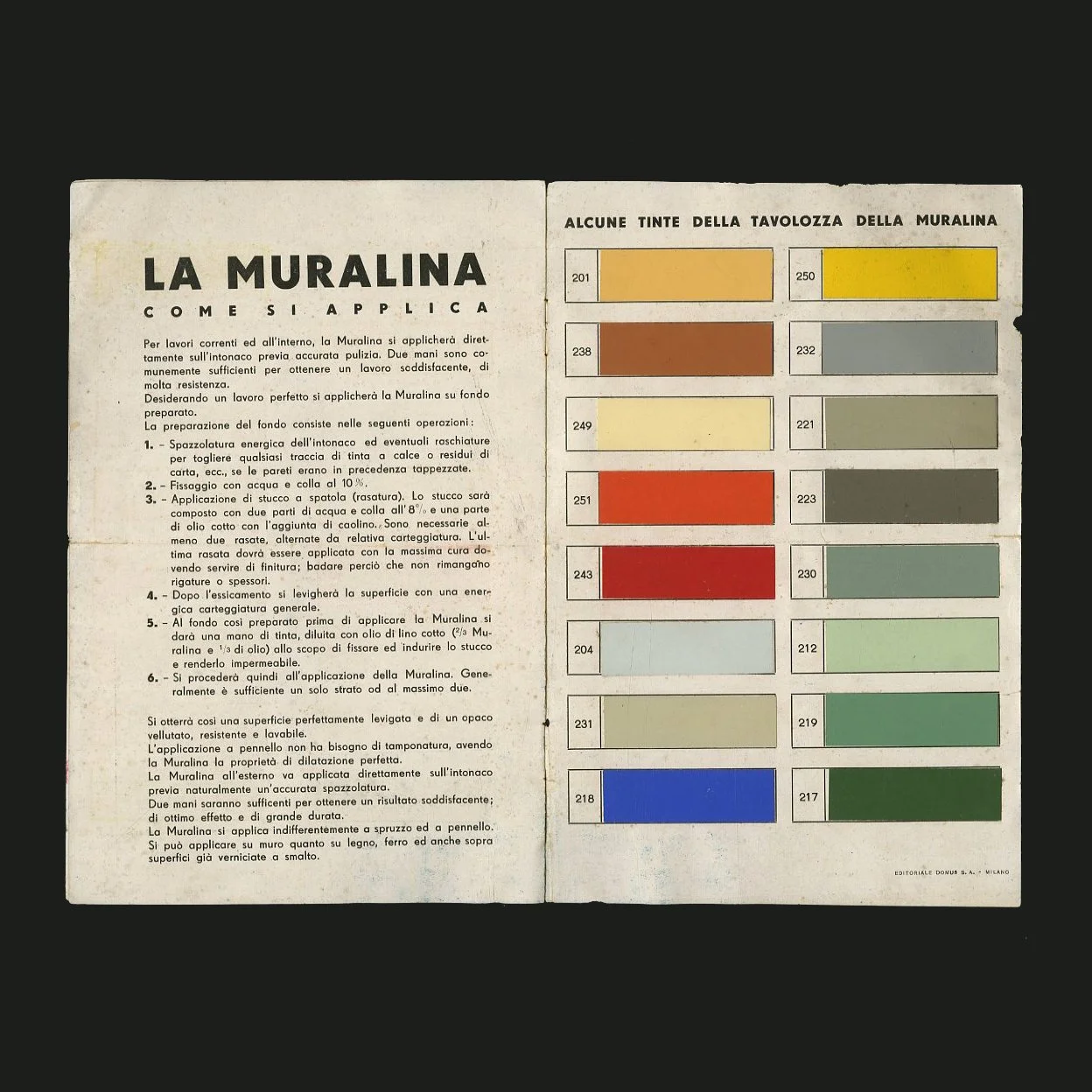 Image 2 of 5
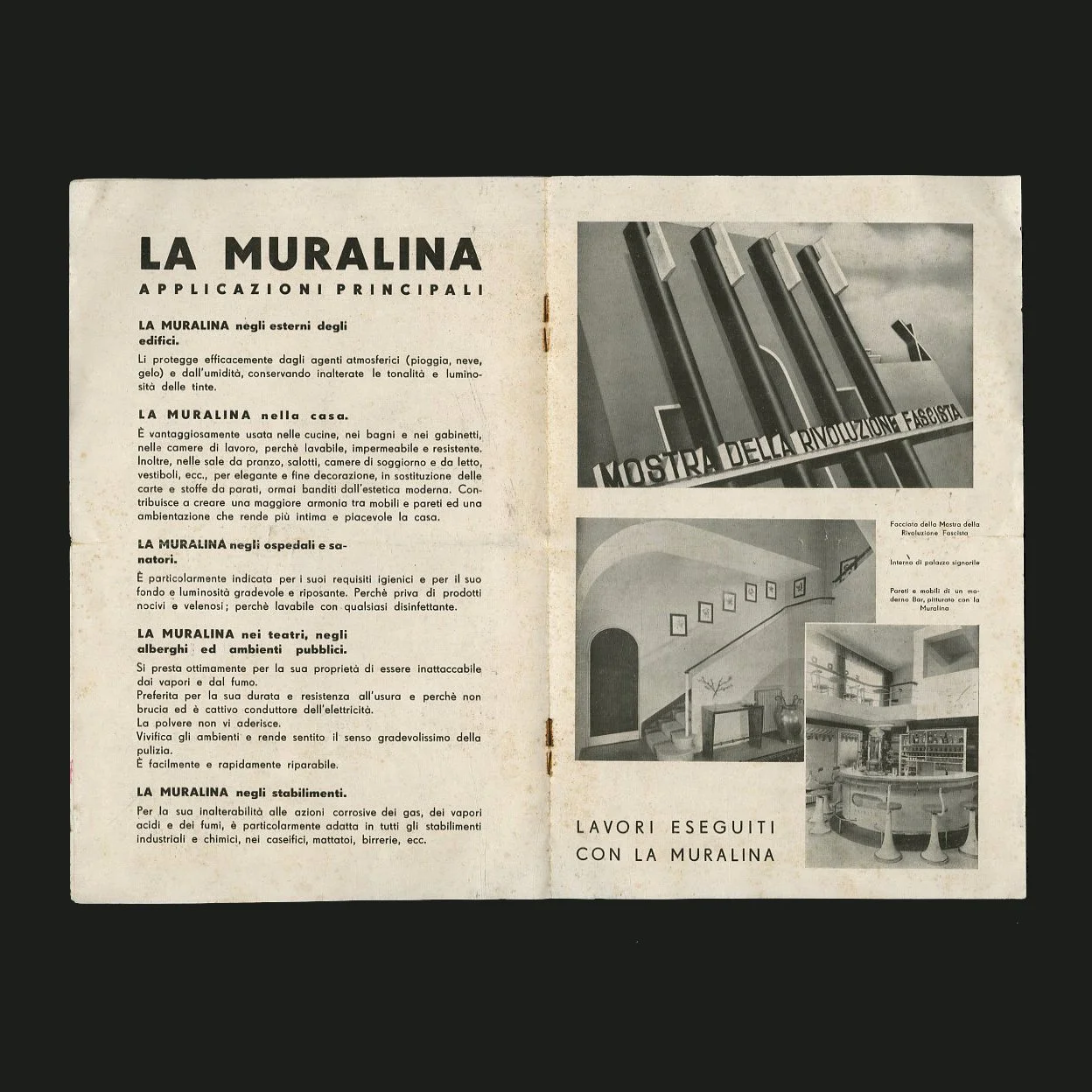 Image 3 of 5
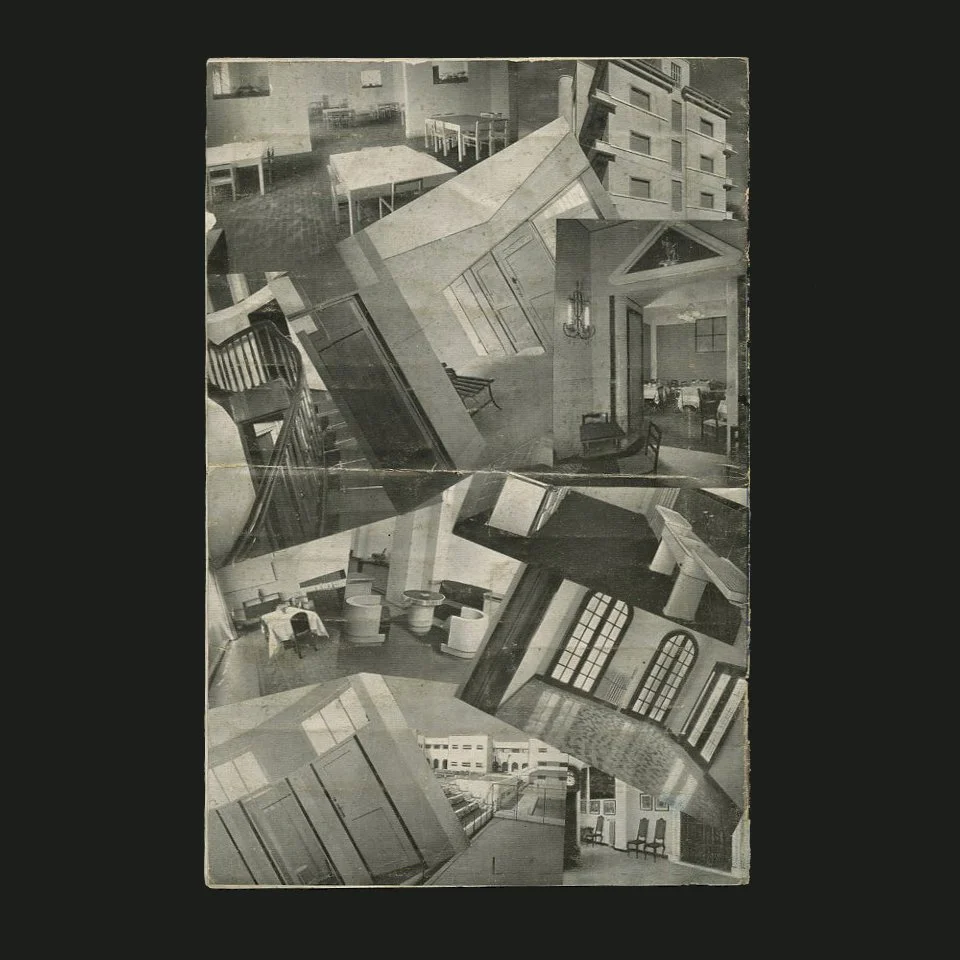 Image 4 of 5
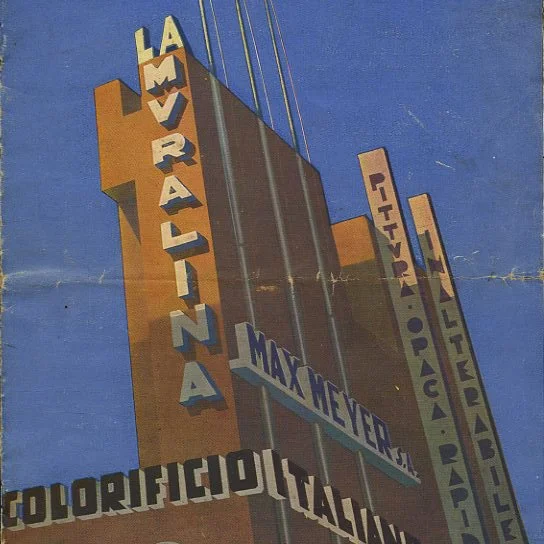 Image 5 of 5
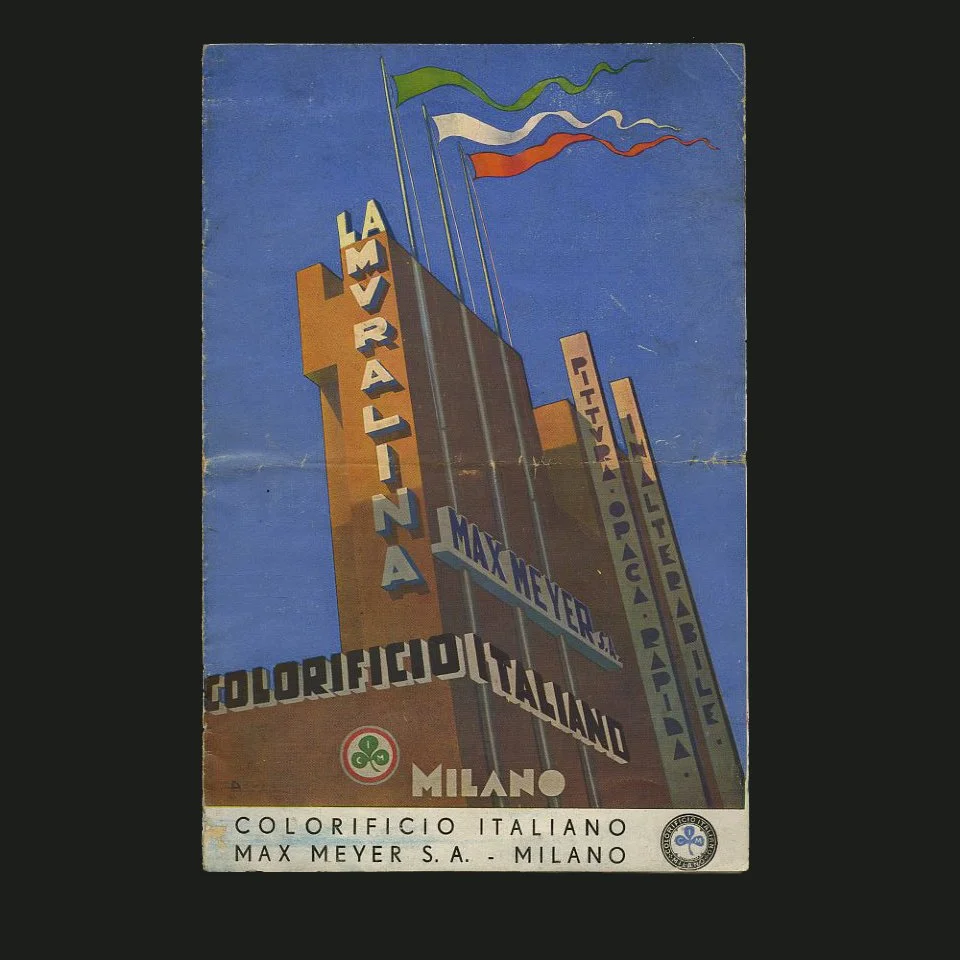
Milano: Editoriale Domus S. A., n. d. [c. 1934]. Original edition. Text in Italian. Slim quarto. Printed and saddle stitched self wrappers. [8] pp. Vintage painting guide illustrated with halftones and 16 tipped in paint swatches. Classic Italian Fascist design and typography. Folded in half with resultant creasing and wear to wrappers. A good copy of a rare survivor.
5.625 x 8.625-inch saddle stitched brochure with 8 pages of wall painting tips and 16 tipped-in paint swatches.
As a pure style without ideology, Art Deco could be applied to any subject or theme. Its distinctive graphic look was identifiable regardless of national origin. And it was nonpartisan: the Italian and German Fascists applied it to their propaganda, as did the French communists, Spanish leftists, and British Socialists. Its heroic and futuristic visual language was equally appropriate in the service of electrical appliances or despotic regimes. [Heller]
Italian decorative art between the wars was an odd coupling of both modernist and classical conceits. Italian art, unlike its counterparts in Germany, thrived under Fascism. Yet Futurism, despite Mussolini’s sanction, lost much of its vitality when used as the regime’s propaganda tool. A Futurist inspired, decorative style of illustration, layout, and typography eventually dominated Italian commercial design before World War II. Primary designers included Erberto Carboni, Marcello Nizzoli, Fortunato Depero, Bruno Munari, F. T. Marinetti, Enrico Prampolini, Paolo Garretto, Zoltan Tamasi, Frederico Seneca, Franco Signorini, Mario Pompei, Cesare Gobbo and many others.
Mussolin liked to call Italian artists, architects, and industrialists his “producers.” They were indeed arms of the party, for their products were consistently used to represent the new order. However, not all graphic design of the period showed the fasci or Mussolini as central motifs. Sometimes the designers and clients just wanted to beautify their environments. Who could blame them?
Milano: Editoriale Domus S. A., n. d. [c. 1934]. Original edition. Text in Italian. Slim quarto. Printed and saddle stitched self wrappers. [8] pp. Vintage painting guide illustrated with halftones and 16 tipped in paint swatches. Classic Italian Fascist design and typography. Folded in half with resultant creasing and wear to wrappers. A good copy of a rare survivor.
5.625 x 8.625-inch saddle stitched brochure with 8 pages of wall painting tips and 16 tipped-in paint swatches.
As a pure style without ideology, Art Deco could be applied to any subject or theme. Its distinctive graphic look was identifiable regardless of national origin. And it was nonpartisan: the Italian and German Fascists applied it to their propaganda, as did the French communists, Spanish leftists, and British Socialists. Its heroic and futuristic visual language was equally appropriate in the service of electrical appliances or despotic regimes. [Heller]
Italian decorative art between the wars was an odd coupling of both modernist and classical conceits. Italian art, unlike its counterparts in Germany, thrived under Fascism. Yet Futurism, despite Mussolini’s sanction, lost much of its vitality when used as the regime’s propaganda tool. A Futurist inspired, decorative style of illustration, layout, and typography eventually dominated Italian commercial design before World War II. Primary designers included Erberto Carboni, Marcello Nizzoli, Fortunato Depero, Bruno Munari, F. T. Marinetti, Enrico Prampolini, Paolo Garretto, Zoltan Tamasi, Frederico Seneca, Franco Signorini, Mario Pompei, Cesare Gobbo and many others.
Mussolin liked to call Italian artists, architects, and industrialists his “producers.” They were indeed arms of the party, for their products were consistently used to represent the new order. However, not all graphic design of the period showed the fasci or Mussolini as central motifs. Sometimes the designers and clients just wanted to beautify their environments. Who could blame them?