
 Image 1 of 13
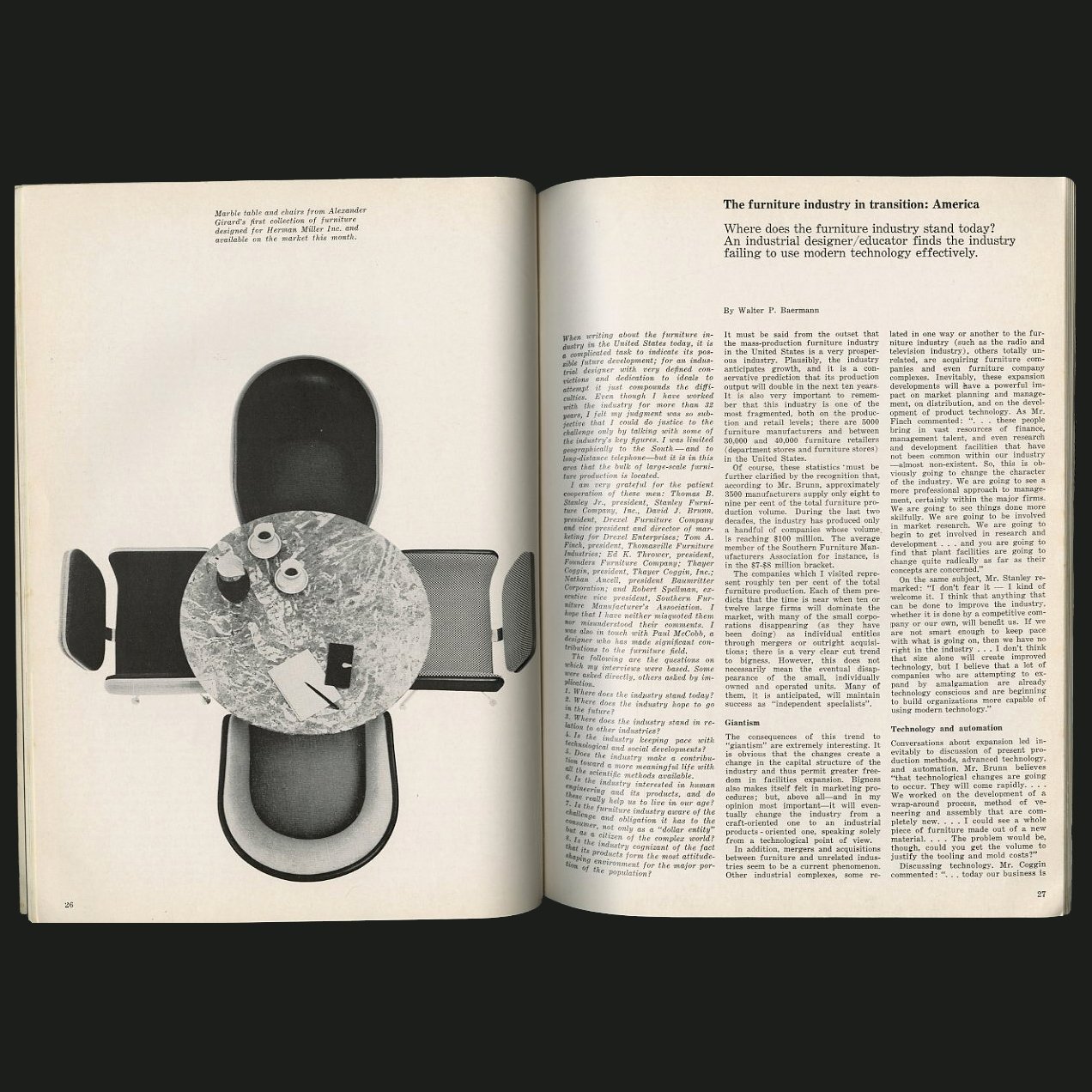 Image 2 of 13
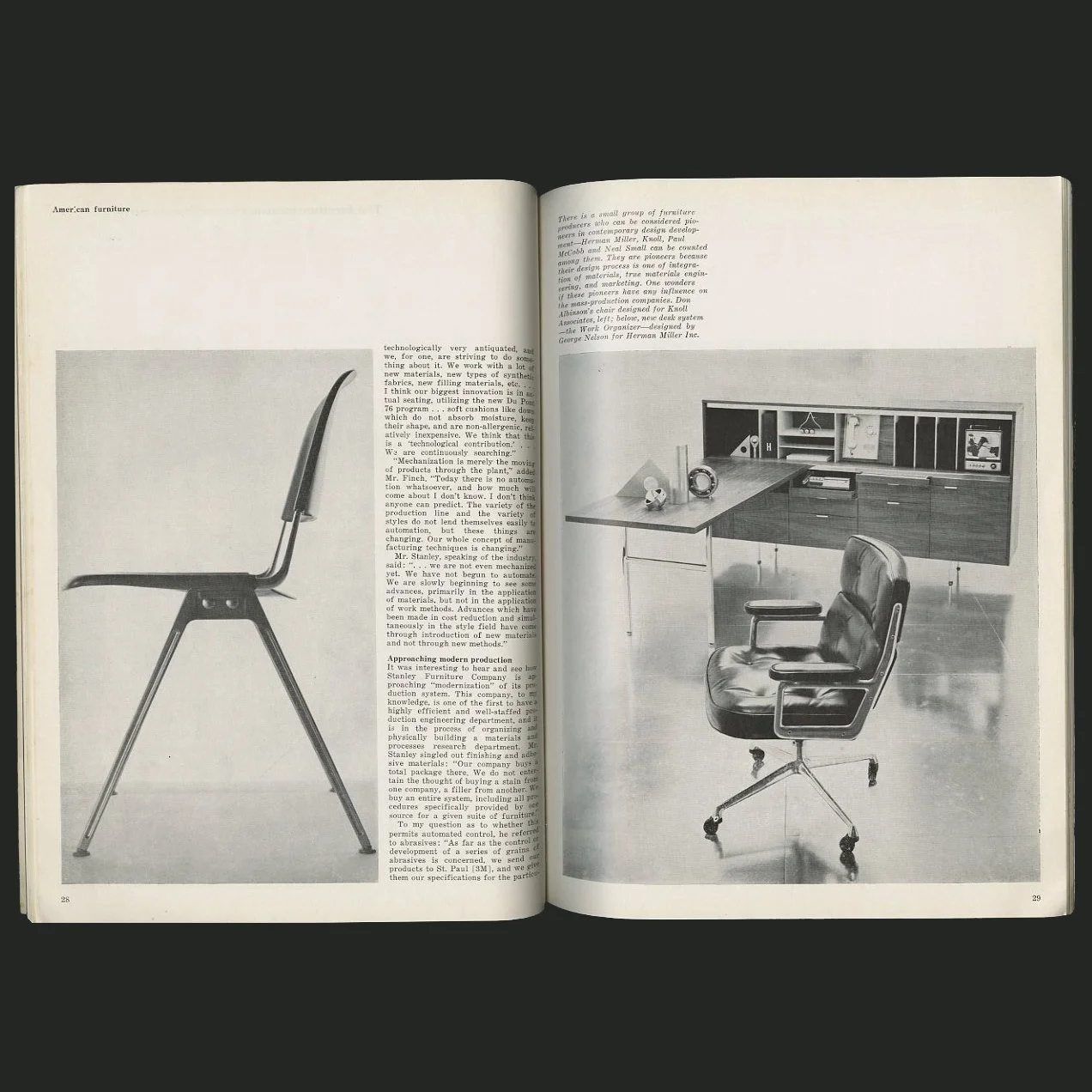 Image 3 of 13
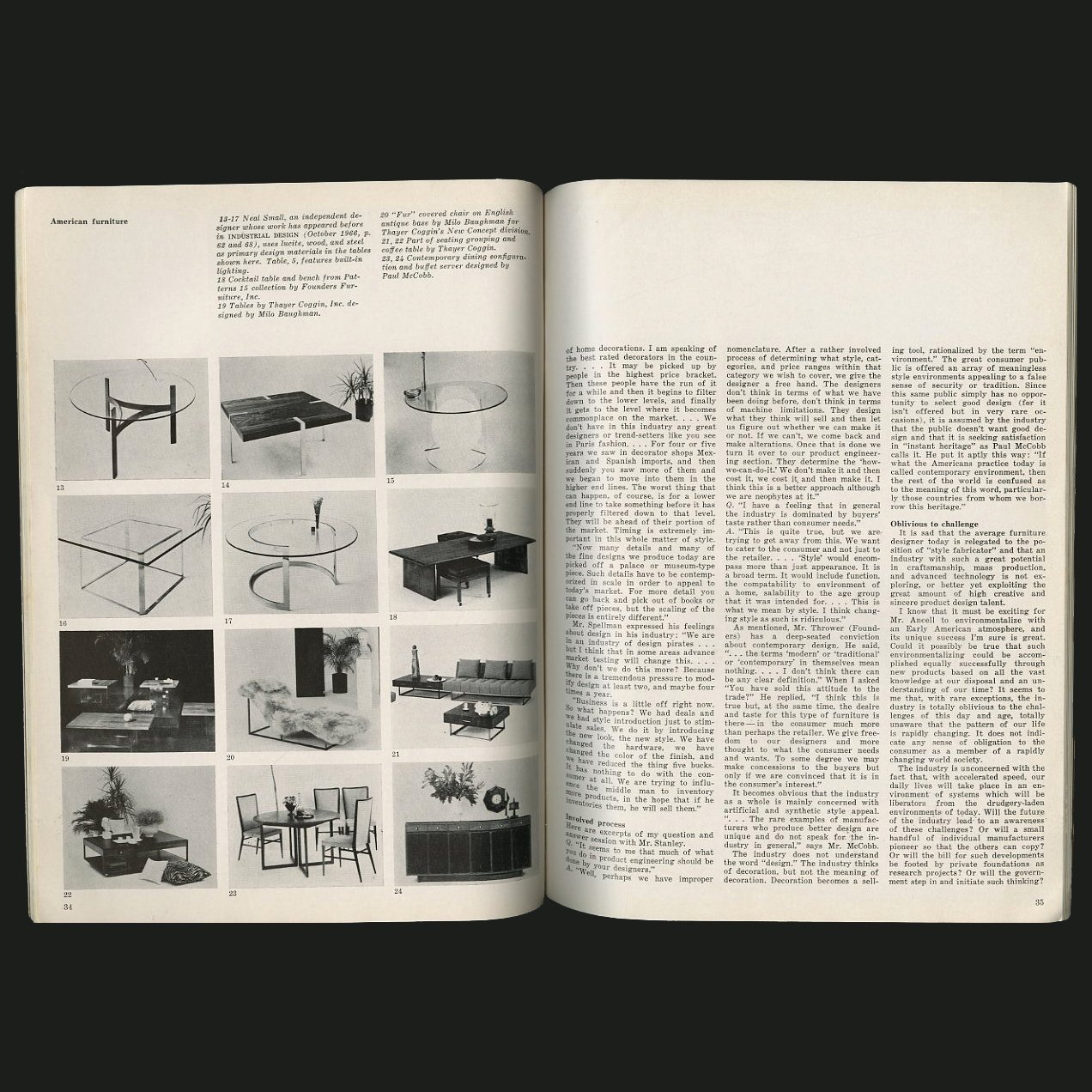 Image 4 of 13
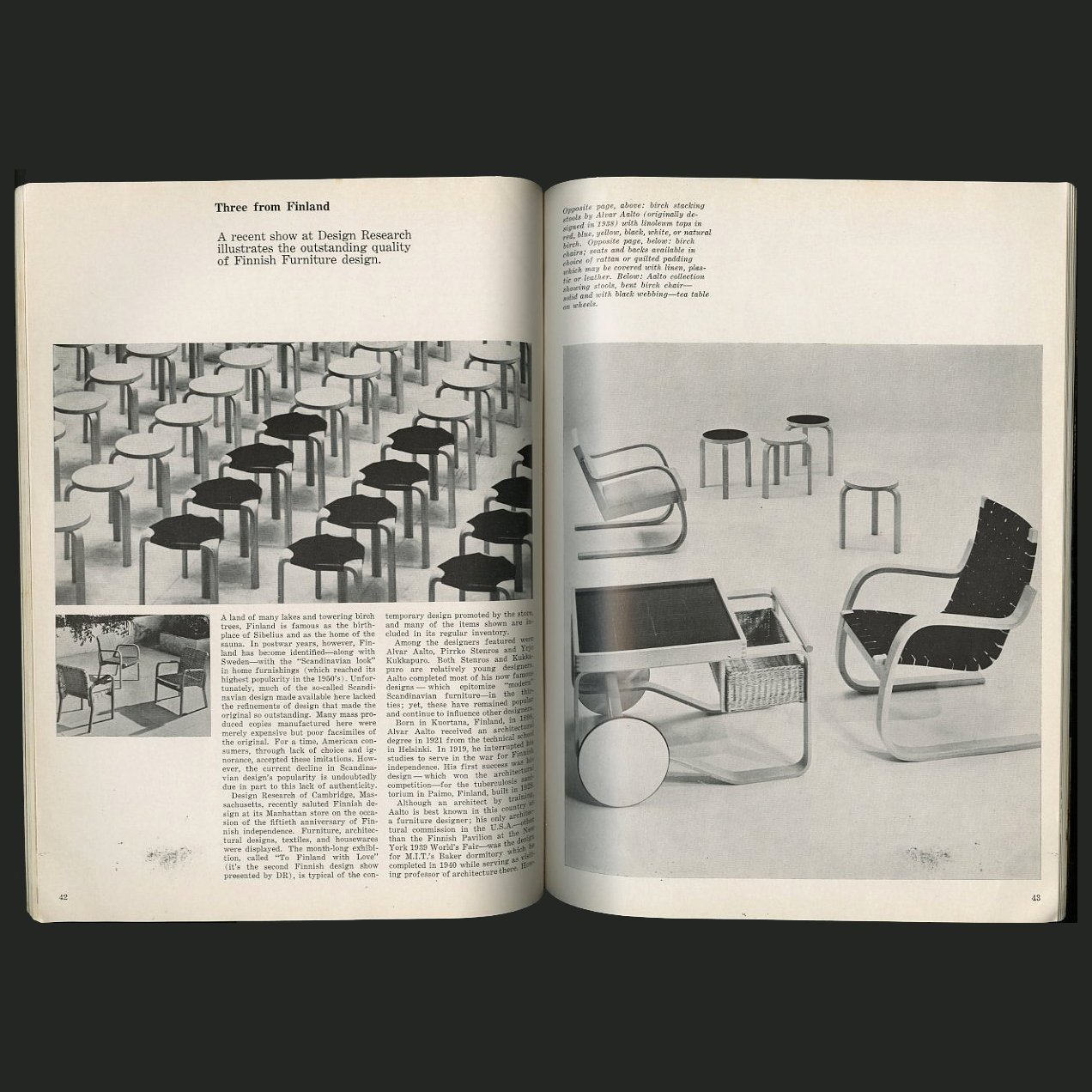 Image 5 of 13
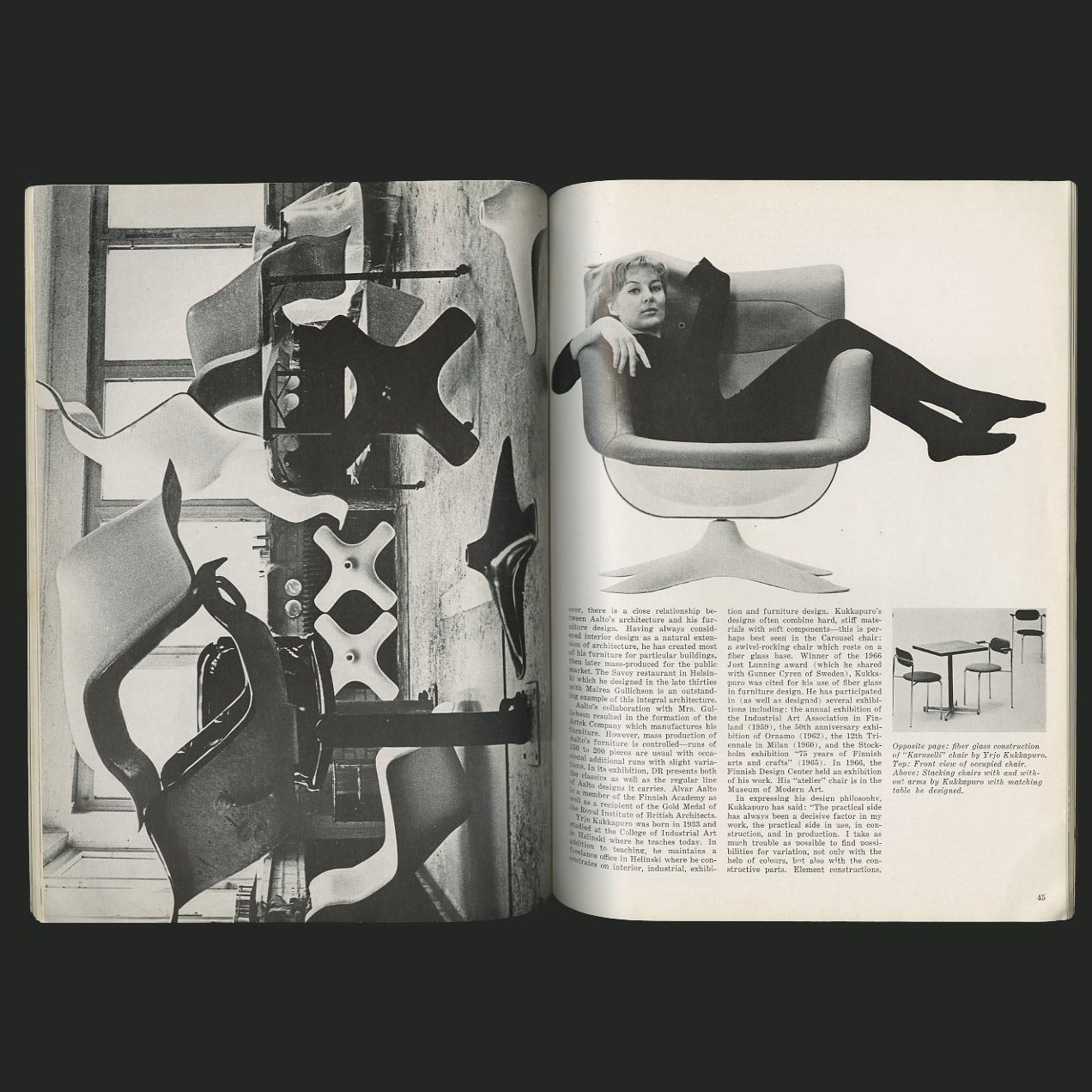 Image 6 of 13
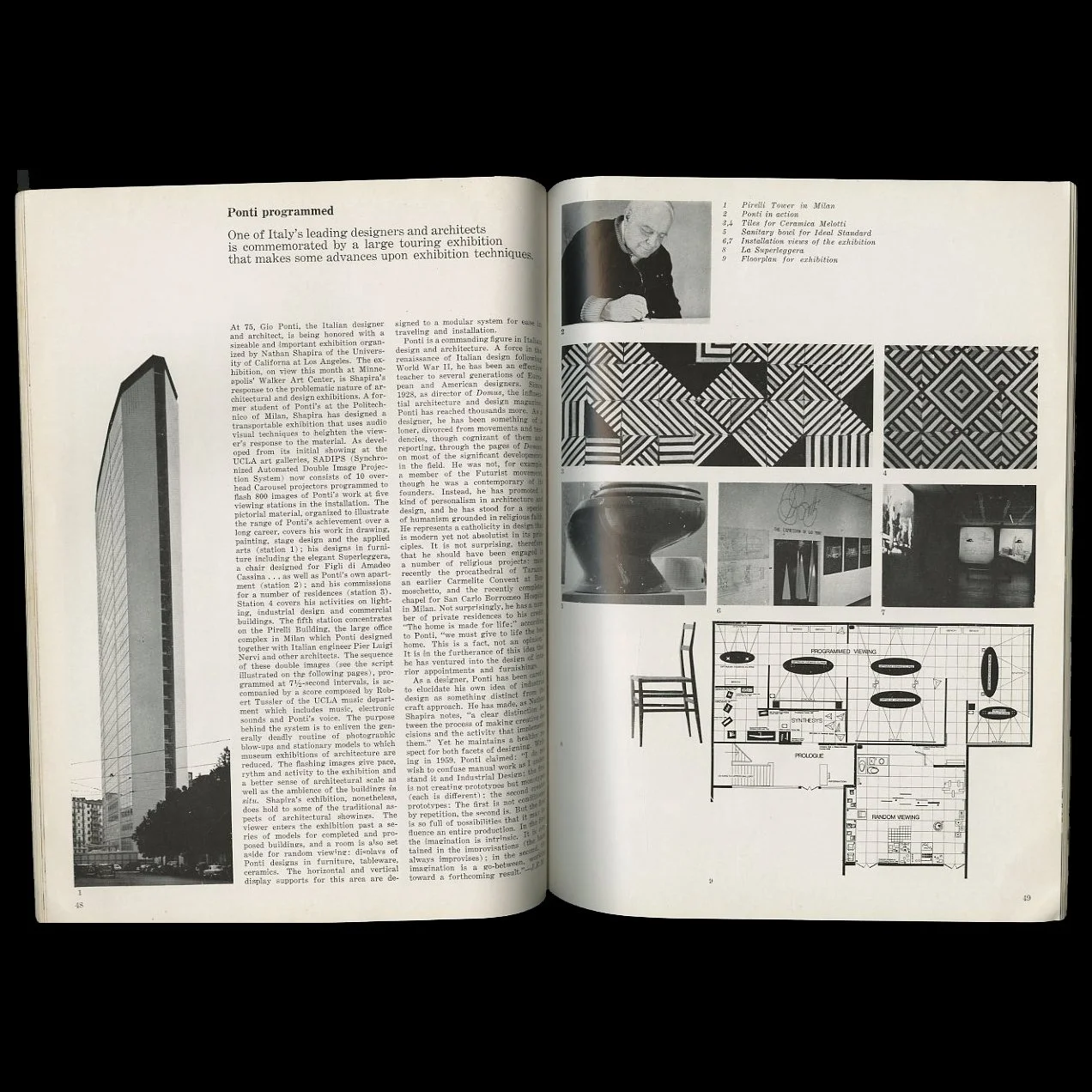 Image 7 of 13
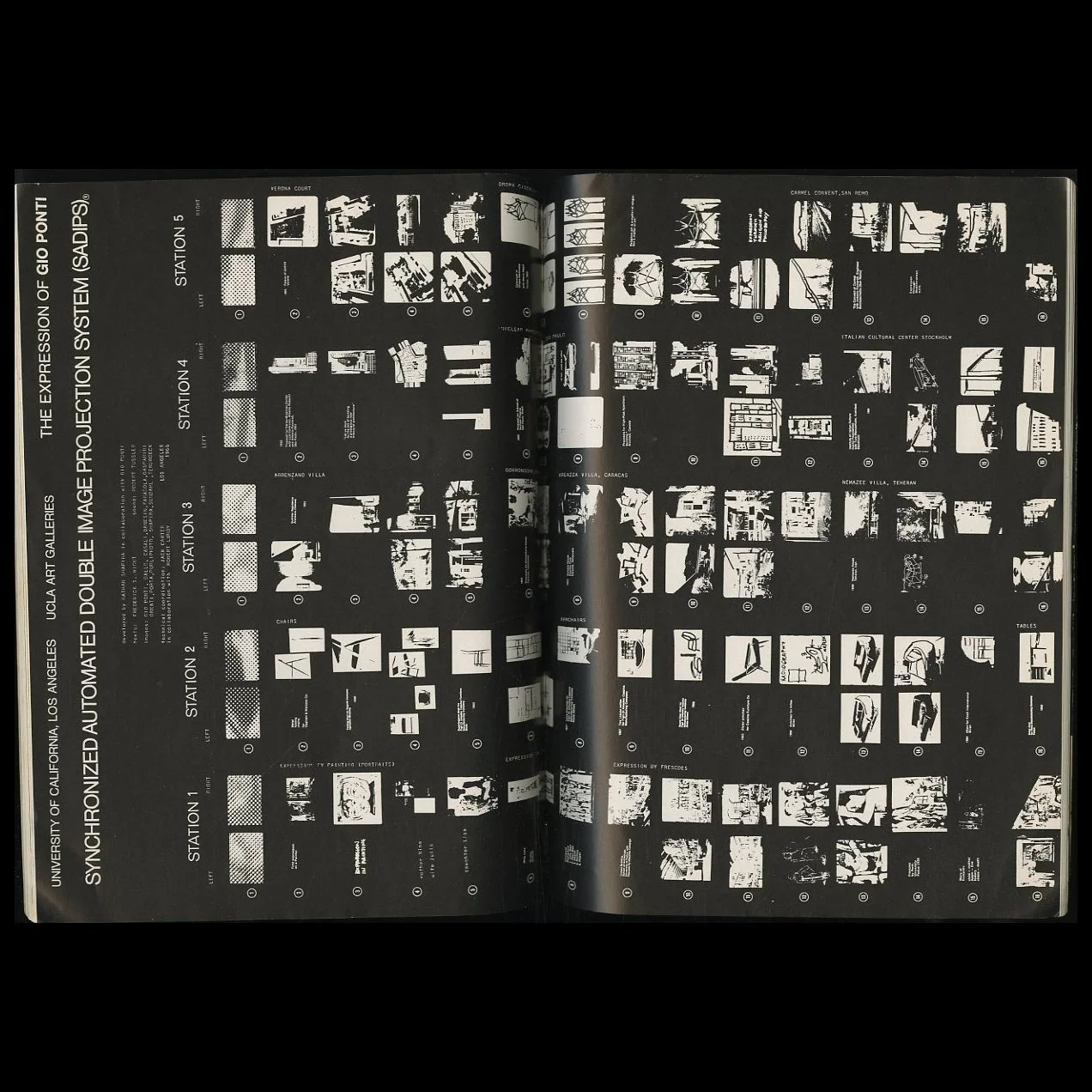 Image 8 of 13
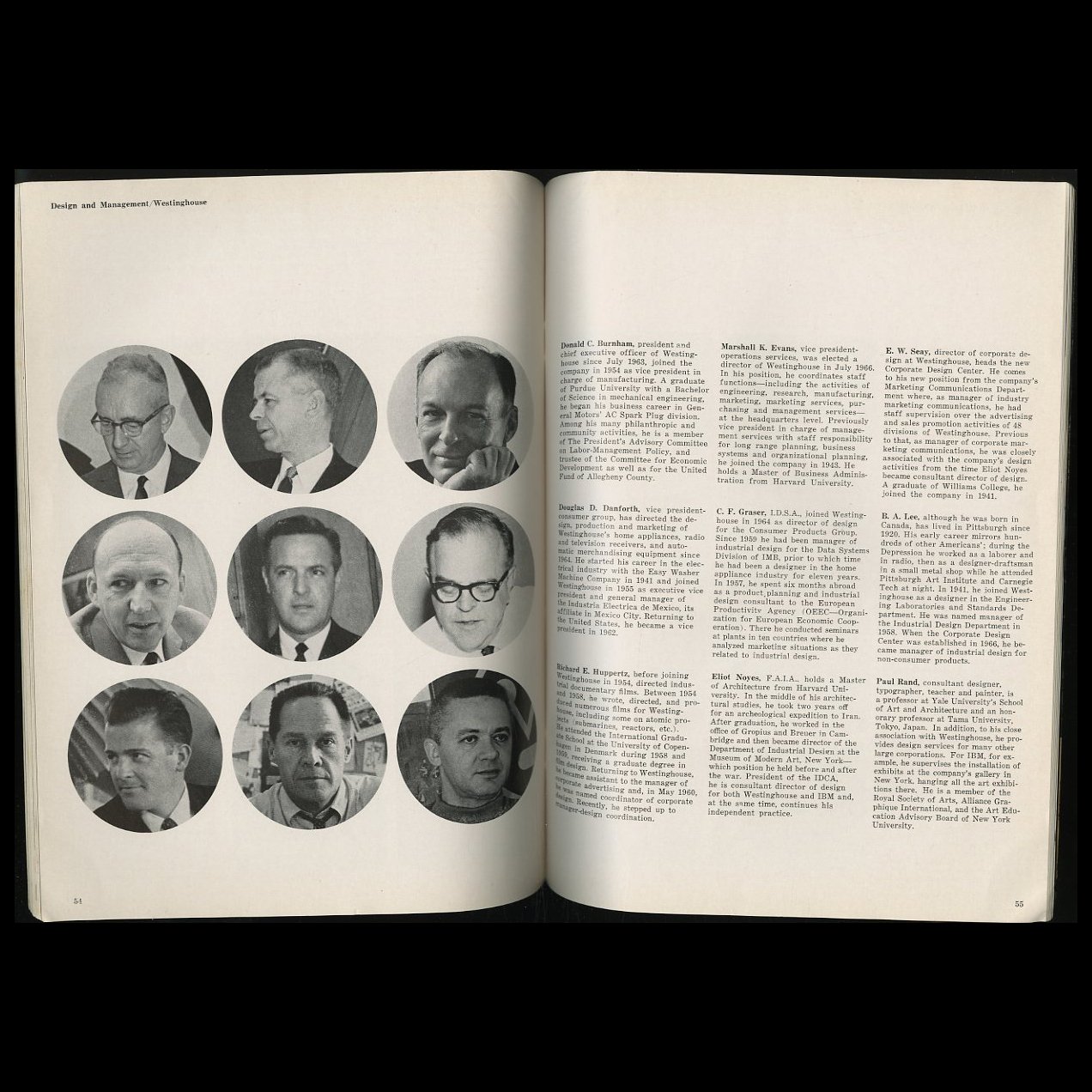 Image 9 of 13
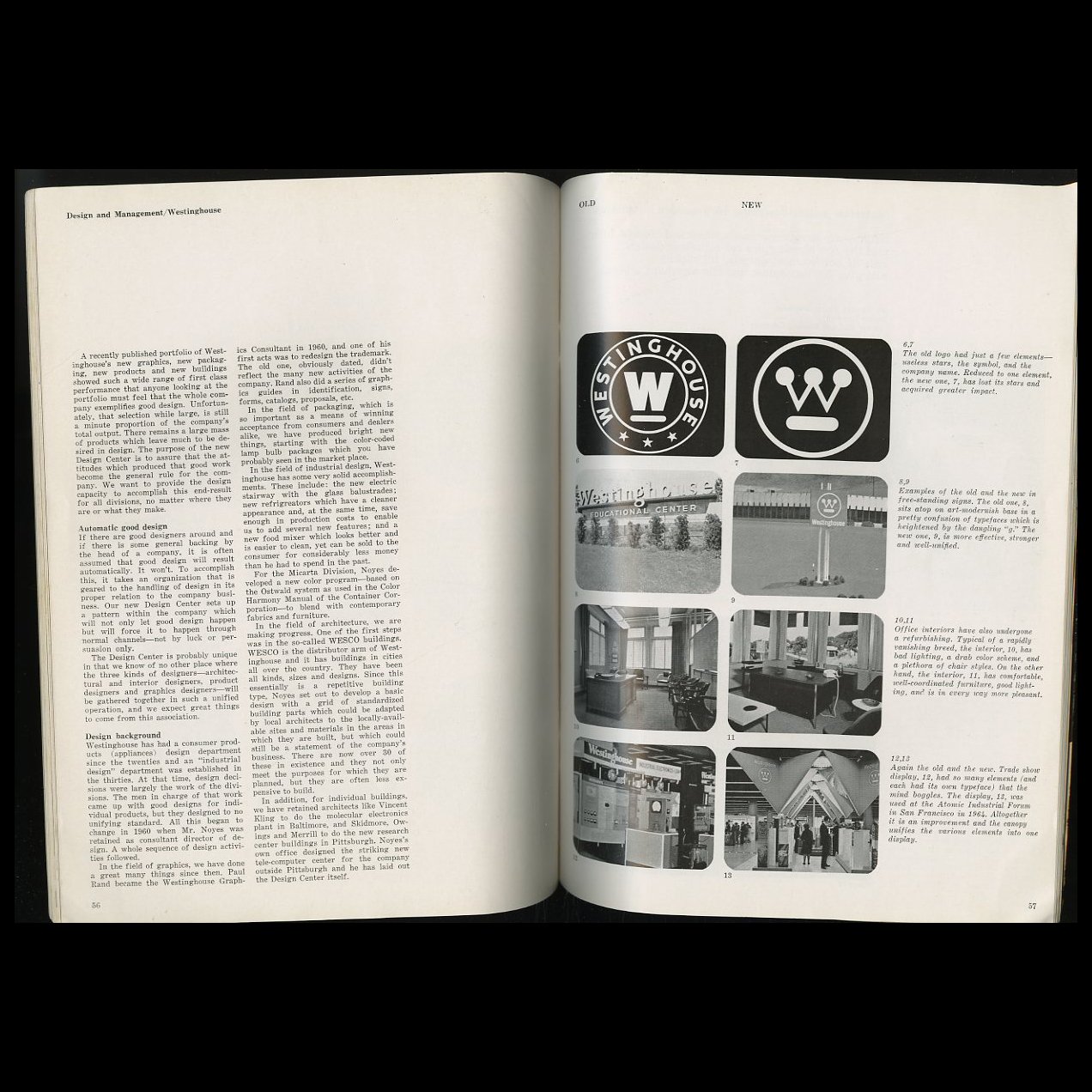 Image 10 of 13
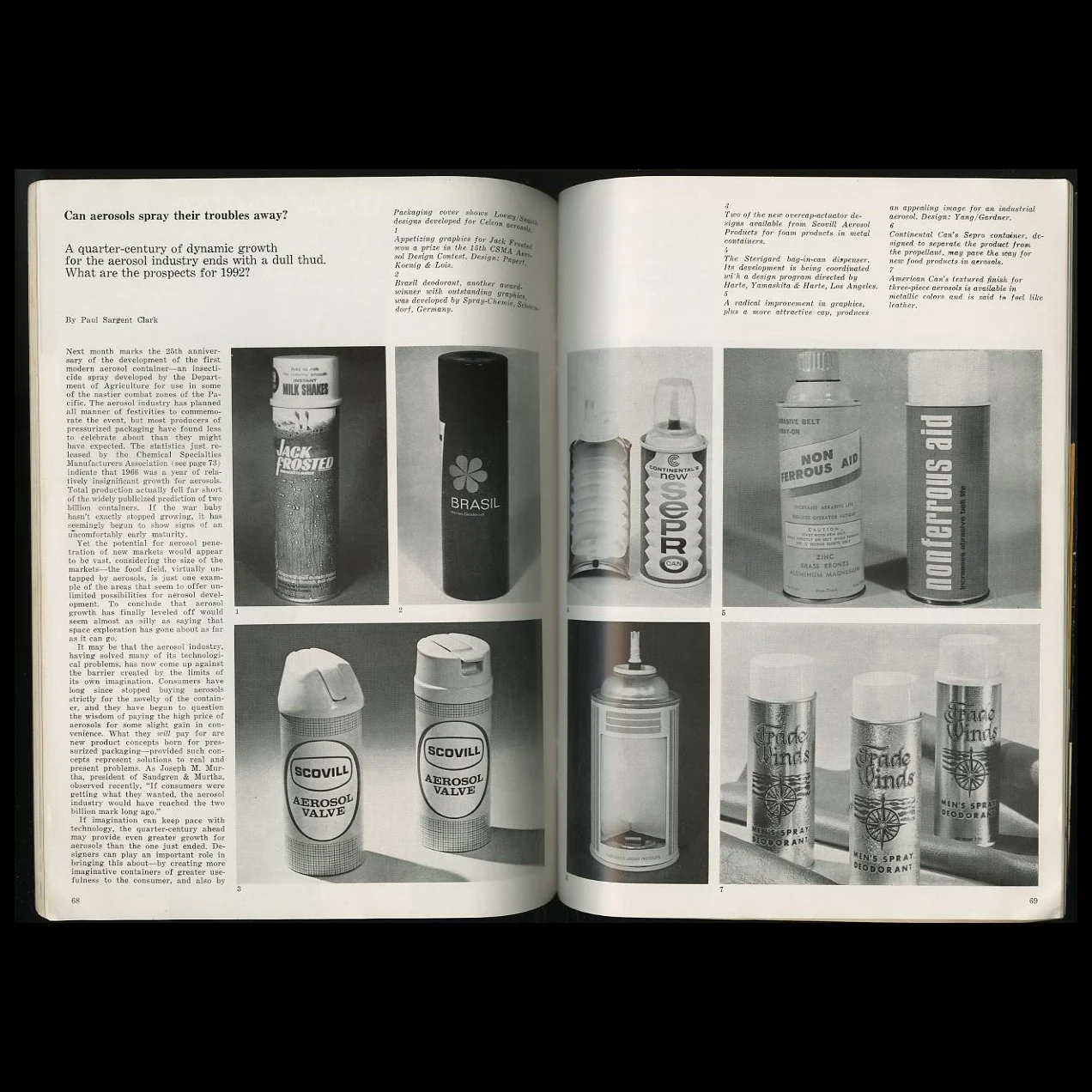 Image 11 of 13
 Image 12 of 13
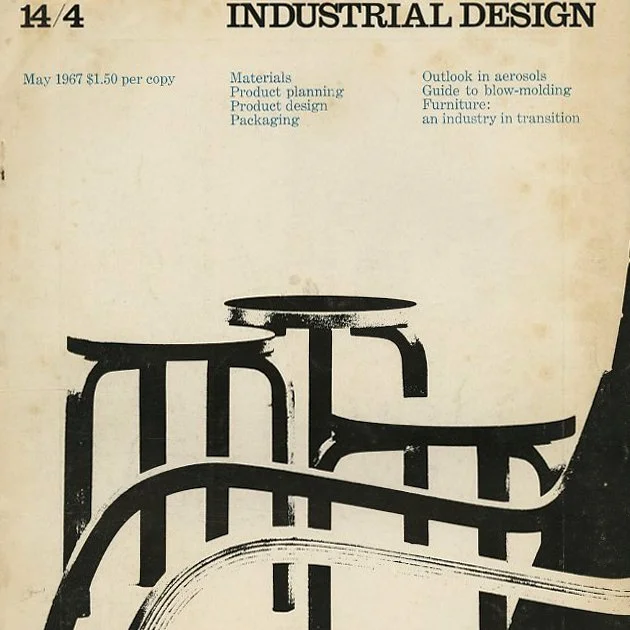 Image 13 of 13
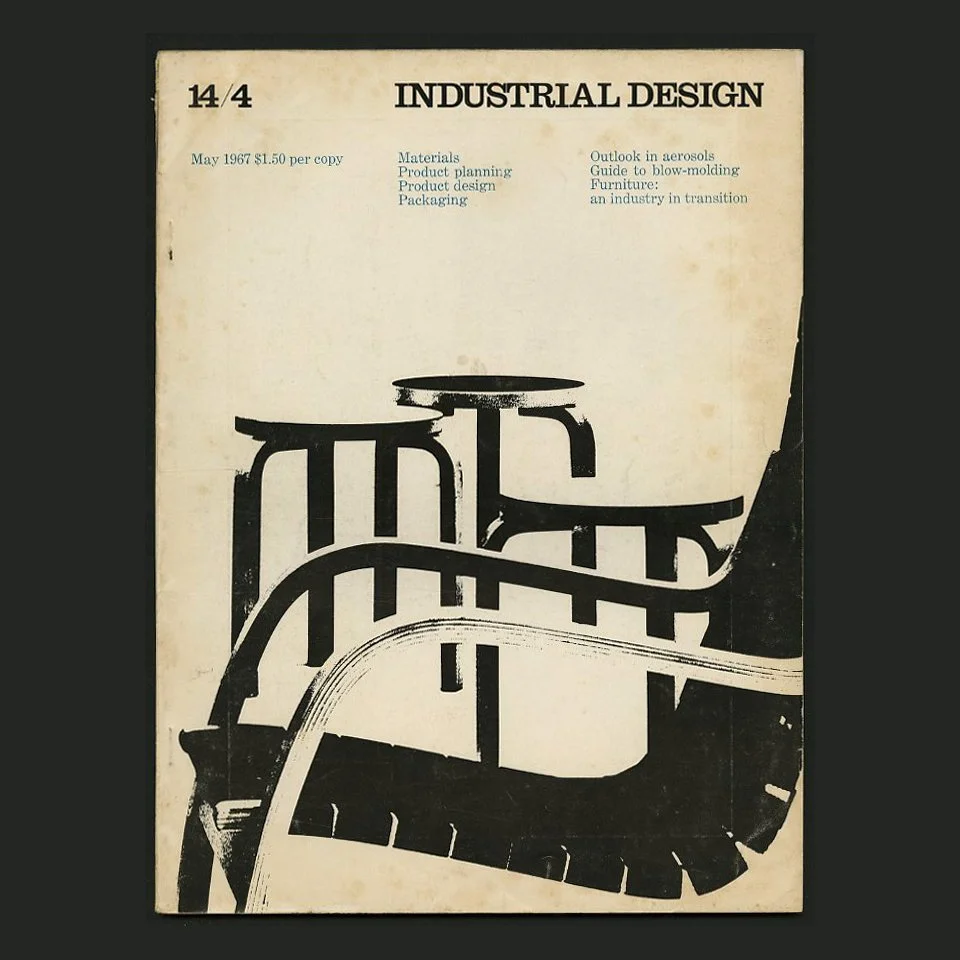
Industrial Design, May 1967. New York: Whitney Publications, Inc., Massimo Vignelli [Designer].
Industrial Design
May 1967
James R. Mellow [Editor],
Massimo Vignelli [Designer]
New York: Whitney Publications, Inc., Volume 14, Number 4, May 1967. Side-stitched perfect bound wrappers. 88 pp. Illustrated articles and advertisements. Multiple paper stocks. Elaborate graphic design throughout. Magazine format and design by Massimo Vignelli premiered with this issue. Wrappers lightly worn and soiled, textblock lower corner bruised, but a very good or better copy.
9 x 12 magazine with 88 pages and illustrated throughout with an amazing variety of editorial content. The publishers wanted this magazine to accomplish: "A bi-monthly review of form and technique in designing for industry. Published for active industrial designers and the design executives throughout industry who are concerned with product design, development and marketing."
Here is former ID editor Ralph Caplan's recounting the magazines birth: "Fifty years ago, the publisher Charlie Whitney ran into Henry Dreyfuss. 'Henry,' he said, 'I'm about to publish a magazine for industrial designers.' 'Wonderful,' Henry replied. 'There are 14 of us.' Caplan remembered, "I.D. was not begun as a magazine for industrial designers, but as a magazine for anyone who had a stake in design and cared about it. This allowed a great deal of editorial latitude."
Contents
The furniture industry in transition: America (includes work by Alexander Girard for Herman Miller, Don Albinson for Knoll, George Nelson for Herman Miller, Neal Small, Founders Furniture, Inc., Milo Baughman for Thayer Coggin, and Paul McCobb)
The furniture industry in transition: Britain (includes work by Robin Day for Hille and Alan Turville and John Lewak for Hille)
Three from Finland: includes work by Alvar Aalto, Yrjo Kukkapuro, and Pirrko Stenros
Ponti programmed: Walker Art Center's exhibit devoted to Gio Ponti
Design and management 2: Westinghouse—includes work by Eliot Noyes and Ed Redings with Paul Rand
Materials guide: designing blow-molded containers
Materials guide: anodic coatings for aluminum
Can aerosols spray their troubles away?
Packaging round-up
Departments include News, Editorial, Design and engineering, Technical literature, Calendar, and Reader service card
The 1982 AIGA MEDAL citation: “Upon the occasion of the major retrospective of the Vignellis' work exhibited at Parsons in 1980, The New York Times critic Paul Goldberger characterized Massimo and Lella Vignelli as “total designers.” They and their office have indeed done it all: industrial and product design, graphic design, book design, magazine and newspaper design, packaging design, interior and exhibit design, furniture design. Massimo and Lella work together in two ways: he concentrates on what they call the “2D”; she handles the “3D”. He's the visionary: “I talk of feelings, possibilities, what a design could be.” She the realist: “I think of feasibility, planning, what a design can be.”
The Vignellis were both born and educated in the industrial, more-European north of Italy, he in Milan and she in Udine, 90 miles away. Massimo's passion was “2D”—graphic design; Lella's family tradition and training were “3D”—architecture. They met at an architects' convention and were married in 1957. Three years later, they opened their first “office of design and architecture” in Milan and designed for Pirelli, Rank Xerox, Olivetti and other design-conscious European firms. But their fascination with the United States, which took root during three years spent here after they were married, eventually grew strong enough to lure them away from Italy permanently. “There is diversity here, and energy, and possibility,” recalls Massimo, “and the need for design.” He cofounded Unimark in 1964, which ballooned and collapsed as the corporate identification boom of the late 1960s hyperventilated, then ran out of breath. In 1972, their present office was formed: Vignelli Associates for two-dimensional design, Vignelli Designs for furniture, objects, exhibitions and interiors.
Not only do the Vignellis design exceeding well, they also think about design. It is not enough that something—a chair, an exhibition, a book, a magazine—looks good and is well designed. The “why” and the “how,” the very process of design itself, must be equally evident and quite beyond the tyranny of individual taste.
“There are three investigations in design,” says Massimo. “The first is the search for structure. Its reward is discipline. The second is the search for specificity. This yields appropriateness. Finally, we search for fun, and we create ambiguity.”
Vignelli design, in both three dimensions and two, is highly architectural in character. Massimo's posters, publications and graphic designs seem to be built in stories, separated by the now-familiar, bold, horizontal rules. Basic geometry is respected. The investigative design process moves from the inside out: “The correct shape is the shape of the object's meaning.” The Vignelli commitment to the correctness of a design has taken their work beyond the mechanical exercise of devising a form best suited to a given function. They've always understood that design itself, in the abstract, could and should be an integral part of function. More than a process and a result, design—good design—is an imperative. “Everything has its own order,” they've said. “You can't take a piece of music and scramble the notes. You can't take a piece of writing and scramble the words. You can't take a space and scramble the chairs around.”
Both in the example set by their work and by their personal commitment of time and energy, design has no advocates more passionate or effective. Both teach, write, lecture, serve on juries and boards, contribute their talent and cast to worthy causes. Unabashedly urban and urbane, their participation in the world of design is enthusiastic, inquiring, generous. The Vignellis are true believers: “When we were young and naïve, we thought we could transform society by providing a better, more designed environment. Naturally, we found that this was not possible. Now, we think more realistically: we see a choice between good design and poor or nondesign. Every society gets the design it deserves. It is our duty to develop a professional attitude in raising the standard of design.”
That sounds serious, and the Vignellis are serious about design. But it is seriousness of purpose conveyed most often through exuberance. When either Massimo or Lella says the word “design,” it is pronounced with a capital “d”: “Design.” As individuals and professionals, their commitment to design and their accomplishments in design have rewarded them well. The Vignelli office continues to thrive and assignments come from an ever more diverse range of clients. Graduates of their firm have set out on their own and established well-respected practices. Only a few of the best and brightest are hired out of the schools each year. Their calendars are crammed; their pace formidable.
“The reward?” asks Massimo, paraphrasing the question. “Why, the reward is to do all this!”
In DESIGN LITERACY (Second Edition, Allworth Press), Steven Heller wrote an essay describing the historical significance of Industrial Design magazine: “Industrial Design was the brainchild of publisher Charles Whitney, who also published the successful Interiors. In 1953 he was convinced by his friend and advisor George Nelson that the time was right to introduce a specialized periodical devoted to practitioners of this burgeoning field. Interiors was already featuring its own industrial design column that had evolved into a discrete section, which Whitney realized had commercial potential as a spinoff. Interiors was also so beautifully designed that Industrial Design could have no less the visual panache of a coffee table book/magazine, replete with foldouts and slipsheets, not unlike the legendary design magazine Portfolio, published between 1949 and 1951. To accomplish this an eminent art director was sought. This was the age of great magazine art directors -- including Alexey Brodovitch, Alexander Liberman, Otto Storch, Cipe Pineles, and Alan Hurlburt -- and Whitney fervently believed that a magazine's design would be the deciding factor in its success. Hence Lustig was entrusted with considerable authority to design the magazine as he saw fit.”
“On the editorial side, however, Whitney decided to take a calculated risk by promoting two young Interiors associate editors to co-editors of Industrial Design. Jane Fisk (now Jane Thompson of the architectural firm Thompson & Wood in Cambridge) and Deborah Allen may have been inexperienced in the field of industrial design but nevertheless had a clear plan to introduce a distinctly journalistic sensibility into professional publishing that emphasized criticism and analysis rather than the puff pieces common to the genre. As it turned out, this became a point of philosophical contention between the designer and editors.”
“If they had a choice the editors would have preferred an art director who, as Thompson explained, "would have been in the trenches with us," a team player with journalistic instincts rather than a distant presence with a formalist sensibility. Because Lustig designed the initial dummy and subsequent two issues in his own studio and returned with the completed layouts to the editorial offices he had made certain assumptions about the presentation of content that were often inconsistent with the editors' vision. "We did not want the words to be gray space, we wanted them to have meaning," recalled Thompson about wanting more spontaneous design responses to the material. But instead of being journalistically intuitive, Lustig imposed his formal preconceptions, and designed the magazine as he would a book.”
“Blocks of text type were indeed used as gray matter to frame an abundance of precisely silhouetted photographs. But if there was a problem it was more in the editors' minds than Lustig's design. While it was not as journalistically paced as say, a Life magazine, it was respectfully, indeed elegantly neutral allowing, for a wide range of material to be presented without interference. Moreover, it was what Whitney wanted, so the editors reconciled themselves to building the magazine's editorial reputation through informative features written by authors not previously associated with trade publishing.”
“Thompson nevertheless hated the first cover with its tight grid and silhouetted photographs. Instead she wanted to disrupt the design purity with a few well composed coverlines. She further favored a conceptual method of intersecting photography, resulting in an editorial idea, not a pure design. Lustig thought coverlines would sully the design and intersecting ideas would be too contrived. Years later, Thompson grudgingly admitted that maybe Lustig's judgment was wiser: "He wanted to make a strong simple statement, which he believed (perhaps erroneously since Industrial Design did not have to compete on the newsstand) had to stand up against the covers of the elegant fashion magazines." Lustig's design set the standard for future covers, and his successor, Martin Rosensweig, continued to produce covers for a few years afterward that more rigidly adhered to the same formal practices.”
“Despite these creative tensions, the early issues of Industrial Design reveal a shift in the nature of professional publishing from a trade to cultural orientation that was in no small way underscored by Lustig's classically modern design.”