
 Image 1 of 3
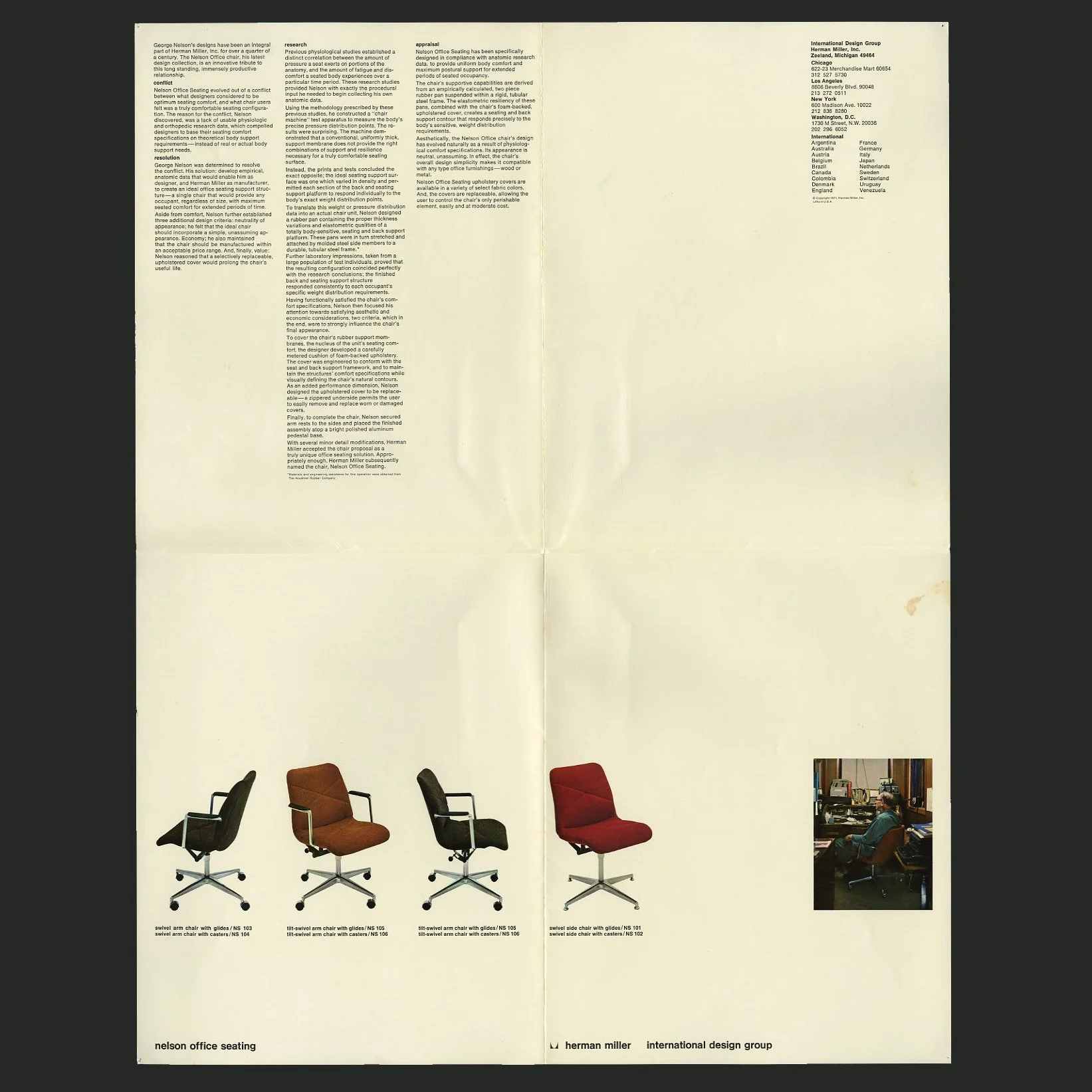 Image 2 of 3
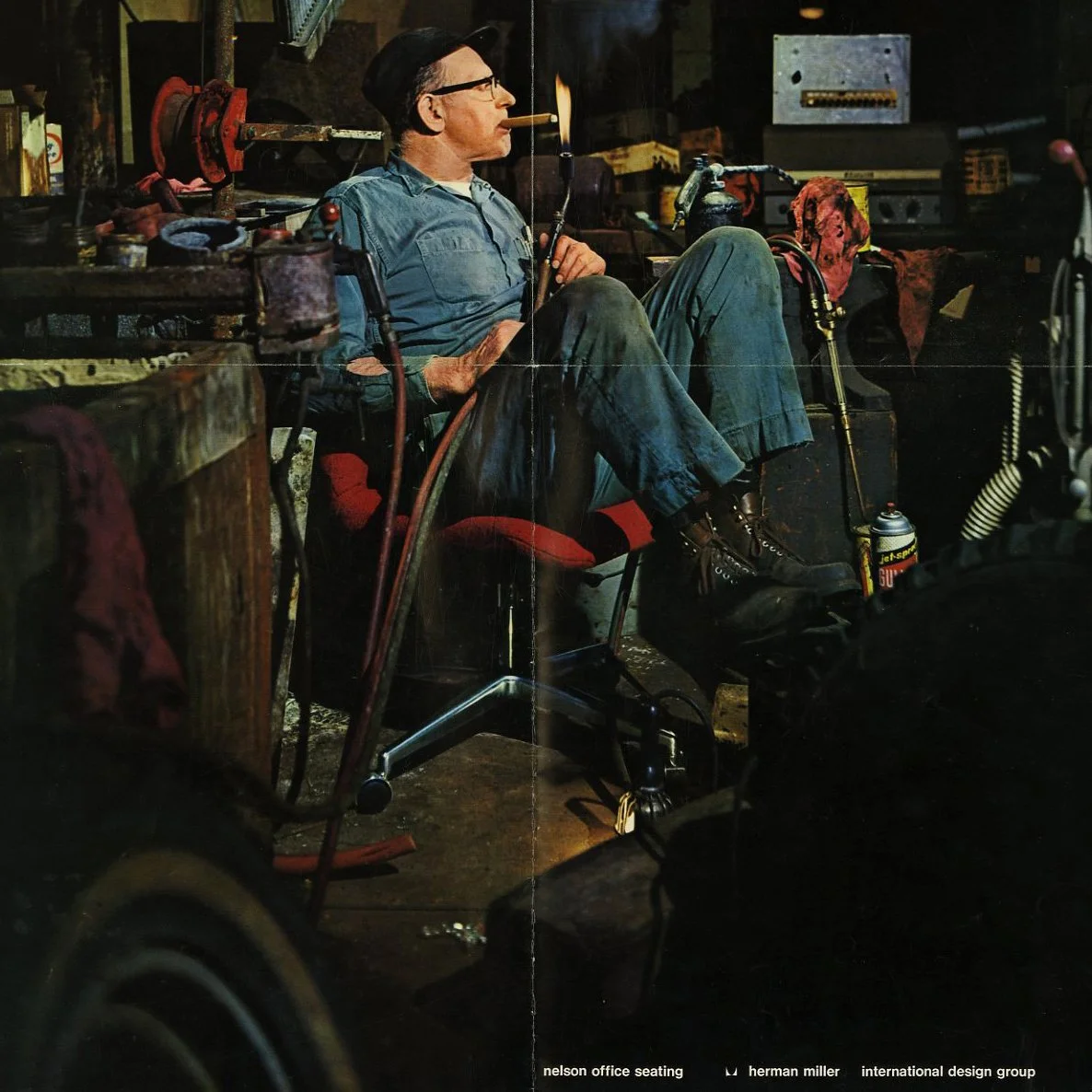 Image 3 of 3
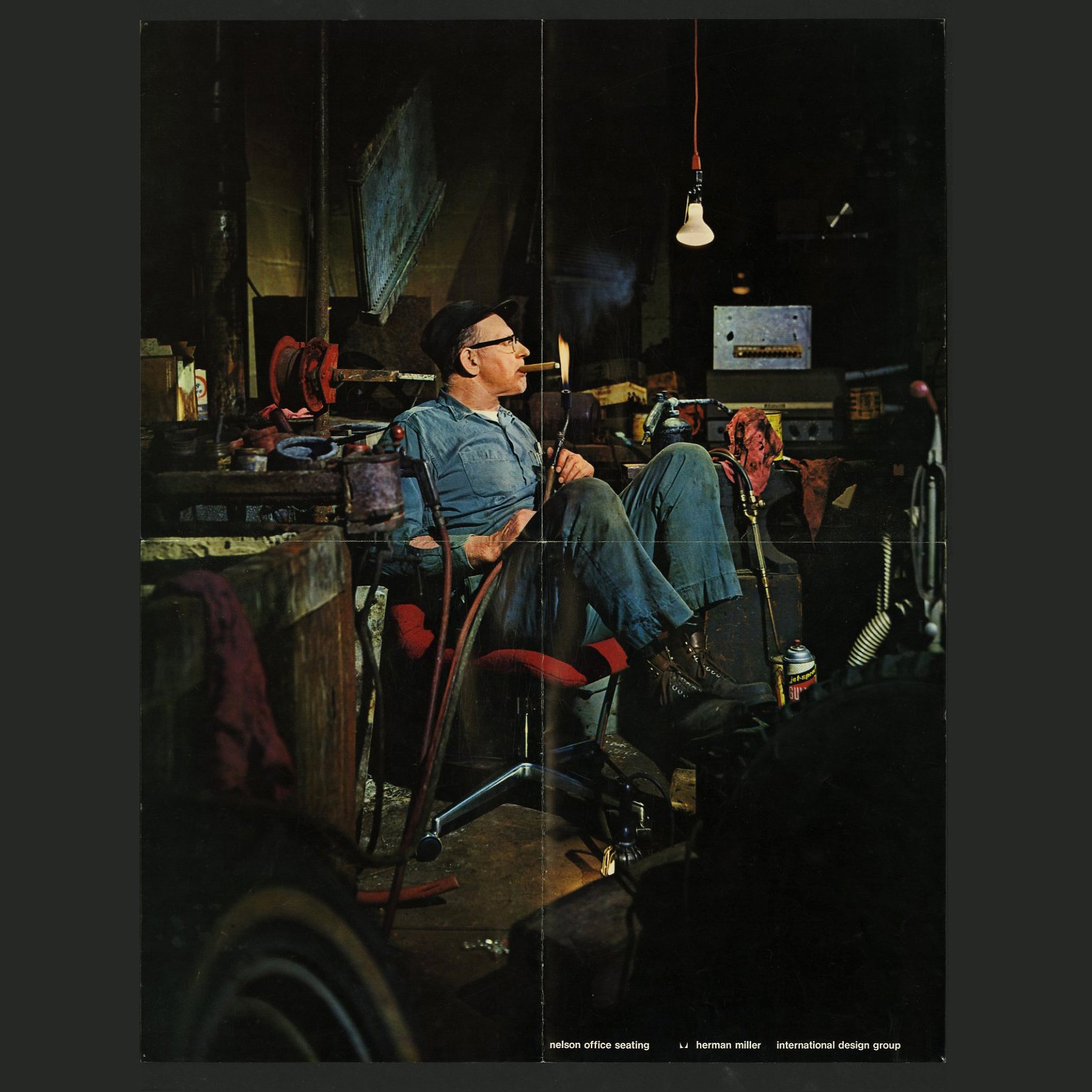
[Zeeland, MI]: Herman Miller International Design Group, 1971. Poster. Original edition. 17 – x 22 –inch sheet printed with full bleeds via 4-colors recto and verso, machine folded into quarters [as issued]. Pinholes to corners, semi-gloss sheet reveals handling divots under raking light and small white paint [?] daub to verso. Crease lines with ink loss and handling overall, still a very good example.
17 – x 22 –inch semi-gloss sheet printed in 4-colors and machine folded into quarters [as issued]. Features product shots of four office chairs designed by George Nelson and marketing material with list of countries represented by the HM nternational Design Group. Unmarked, but from the library of James Prestini.
“To me, a poster is really nothing more than a postage stamp, except big. And I think posters should be large.” — Steve Frykholm
“In 1970, Herman Miller hired its first in-house graphic designer, a bright-eyed Cranbrook graduate named Steve Frykholm. Among his initial assignments was the task of designing a poster to promote the company’s annual picnic. Little did he know that the resulting poster would spark an ambitious series that has since made its way into countless museum collections and firmly landed him on the short list of Herman Miller’s illustrious design alumni.
“When I first got to Cranbrook, I didn’t know about Herman Miller. But the department was made up of graphic designers, product designers, environmental designers, and they would all go over to the annual sale at Herman Miller and come back to school with these treasures—an Eames chair or some Girard fabric, and that was my first awareness of this little company out in Zeeland, Michigan. When I was in Boston interviewing, my parents told me I got a call from Herman Miller, so I called them. They were developing an internal graphic design group and wondered if I’d be interested in interviewing for a position.” [Amber Bravo, Why Magazine]
[Zeeland, MI]: Herman Miller International Design Group, 1971. Poster. Original edition. 17 – x 22 –inch sheet printed with full bleeds via 4-colors recto and verso, machine folded into quarters [as issued]. Pinholes to corners, semi-gloss sheet reveals handling divots under raking light and small white paint [?] daub to verso. Crease lines with ink loss and handling overall, still a very good example.
17 – x 22 –inch semi-gloss sheet printed in 4-colors and machine folded into quarters [as issued]. Features product shots of four office chairs designed by George Nelson and marketing material with list of countries represented by the HM nternational Design Group. Unmarked, but from the library of James Prestini.
“To me, a poster is really nothing more than a postage stamp, except big. And I think posters should be large.” — Steve Frykholm
“In 1970, Herman Miller hired its first in-house graphic designer, a bright-eyed Cranbrook graduate named Steve Frykholm. Among his initial assignments was the task of designing a poster to promote the company’s annual picnic. Little did he know that the resulting poster would spark an ambitious series that has since made its way into countless museum collections and firmly landed him on the short list of Herman Miller’s illustrious design alumni.
“When I first got to Cranbrook, I didn’t know about Herman Miller. But the department was made up of graphic designers, product designers, environmental designers, and they would all go over to the annual sale at Herman Miller and come back to school with these treasures—an Eames chair or some Girard fabric, and that was my first awareness of this little company out in Zeeland, Michigan. When I was in Boston interviewing, my parents told me I got a call from Herman Miller, so I called them. They were developing an internal graphic design group and wondered if I’d be interested in interviewing for a position.” [Amber Bravo, Why Magazine]