
 Image 1 of 13
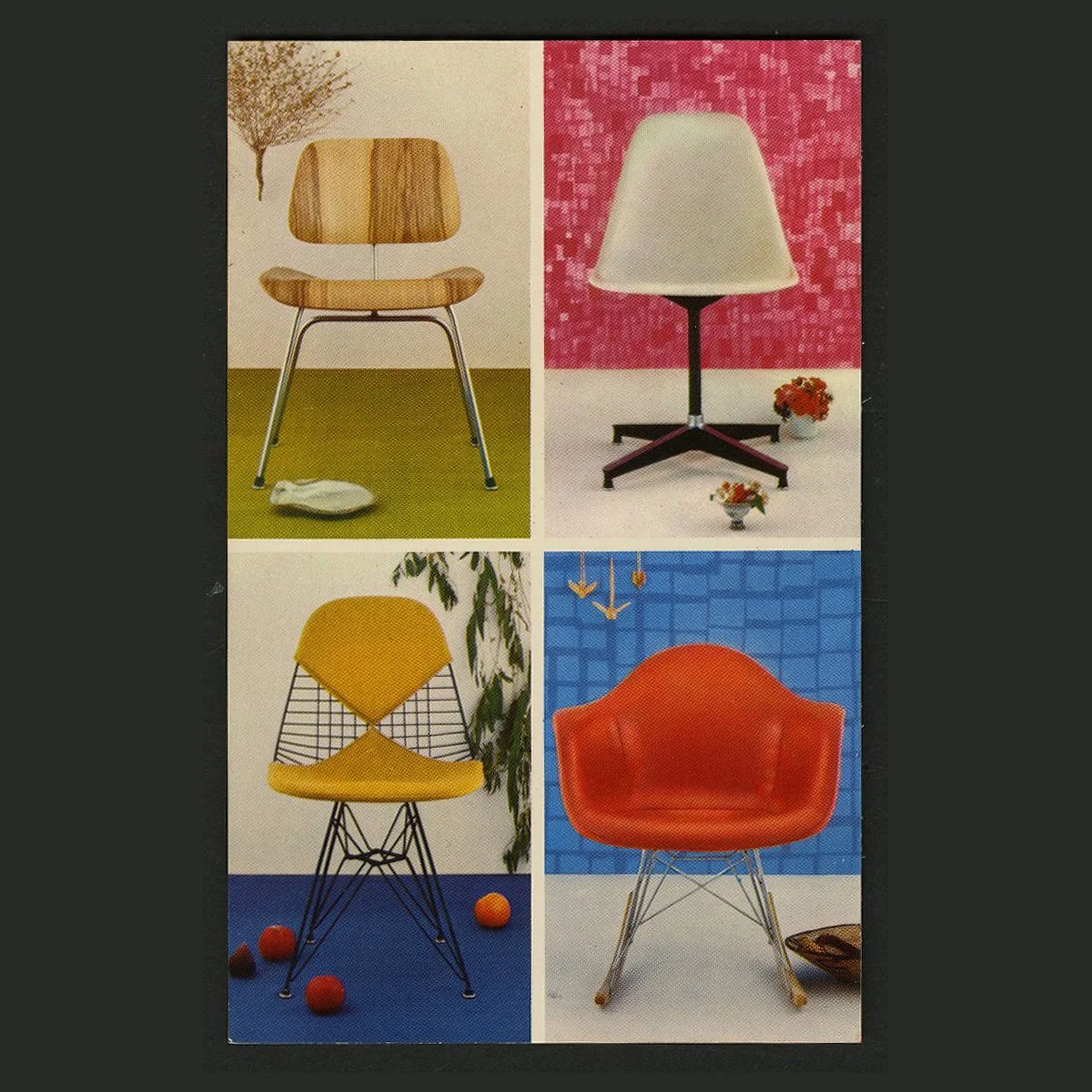 Image 2 of 13
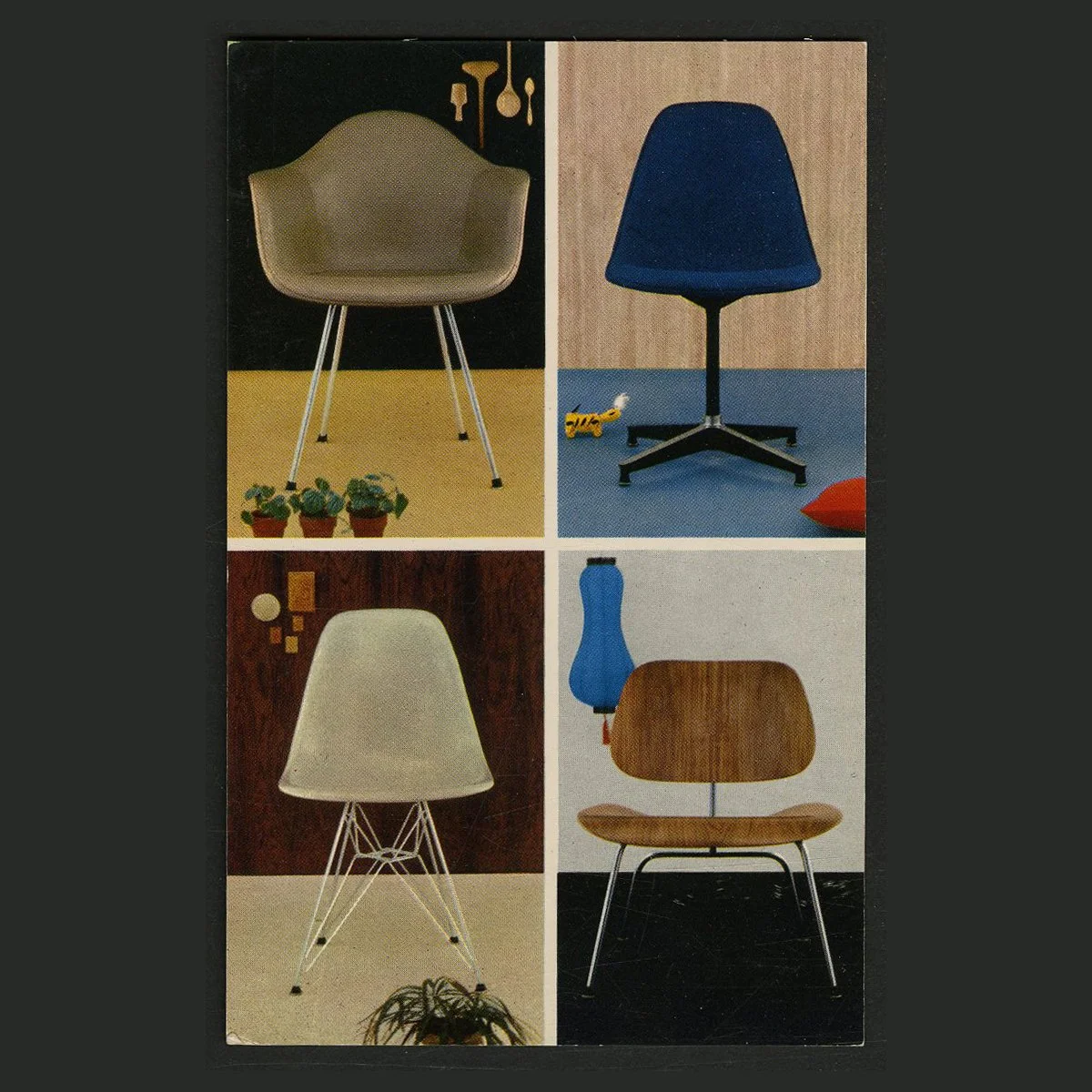 Image 3 of 13
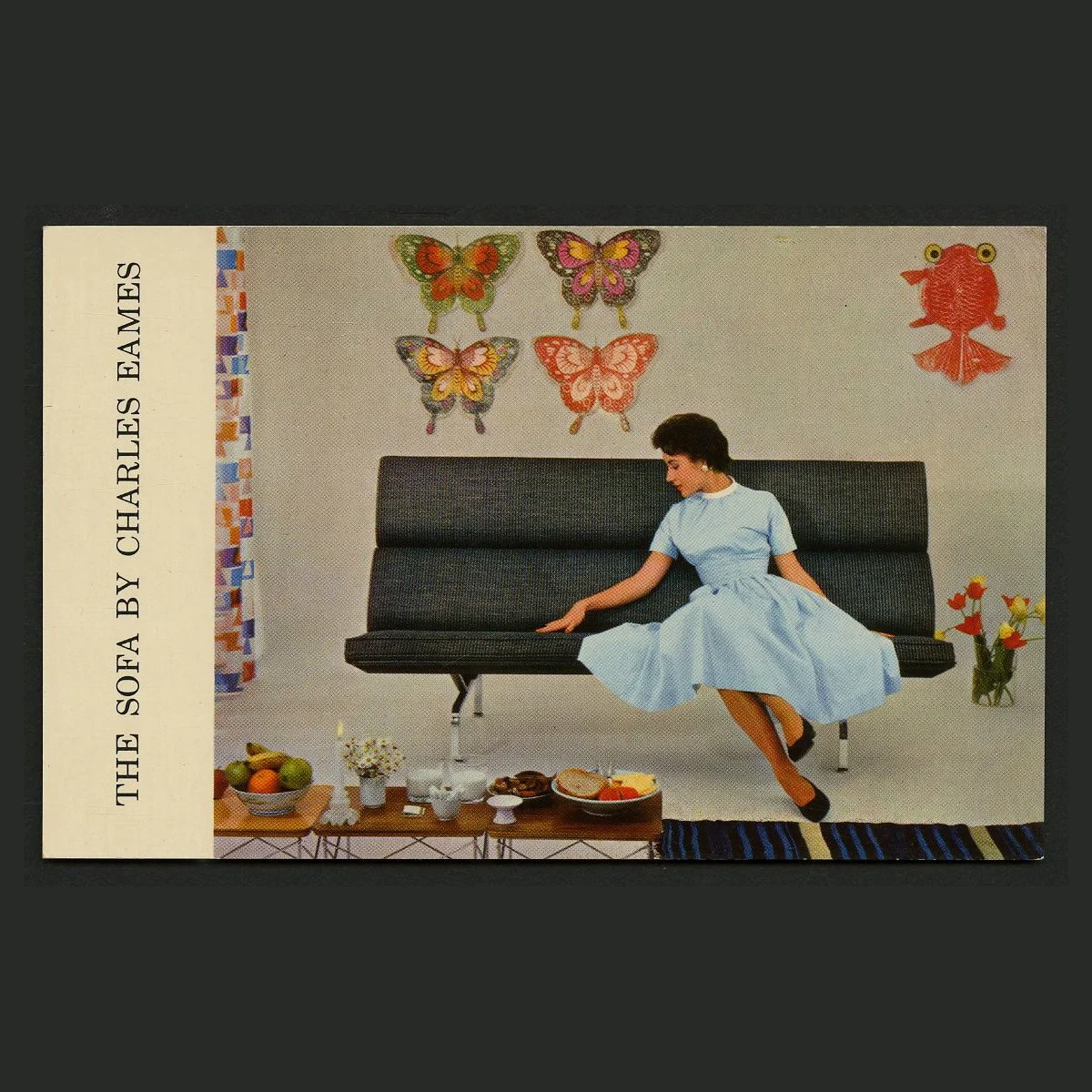 Image 4 of 13
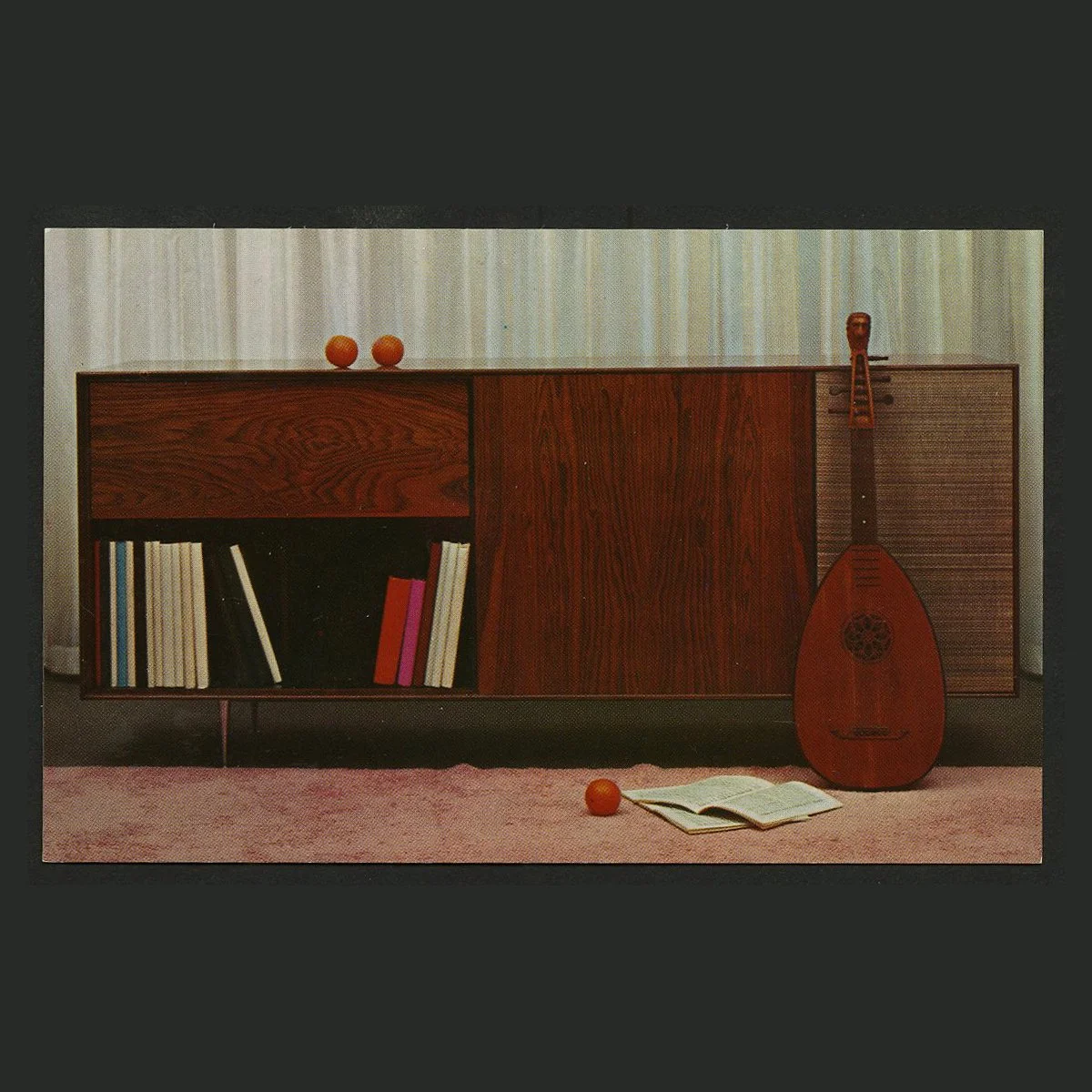 Image 5 of 13
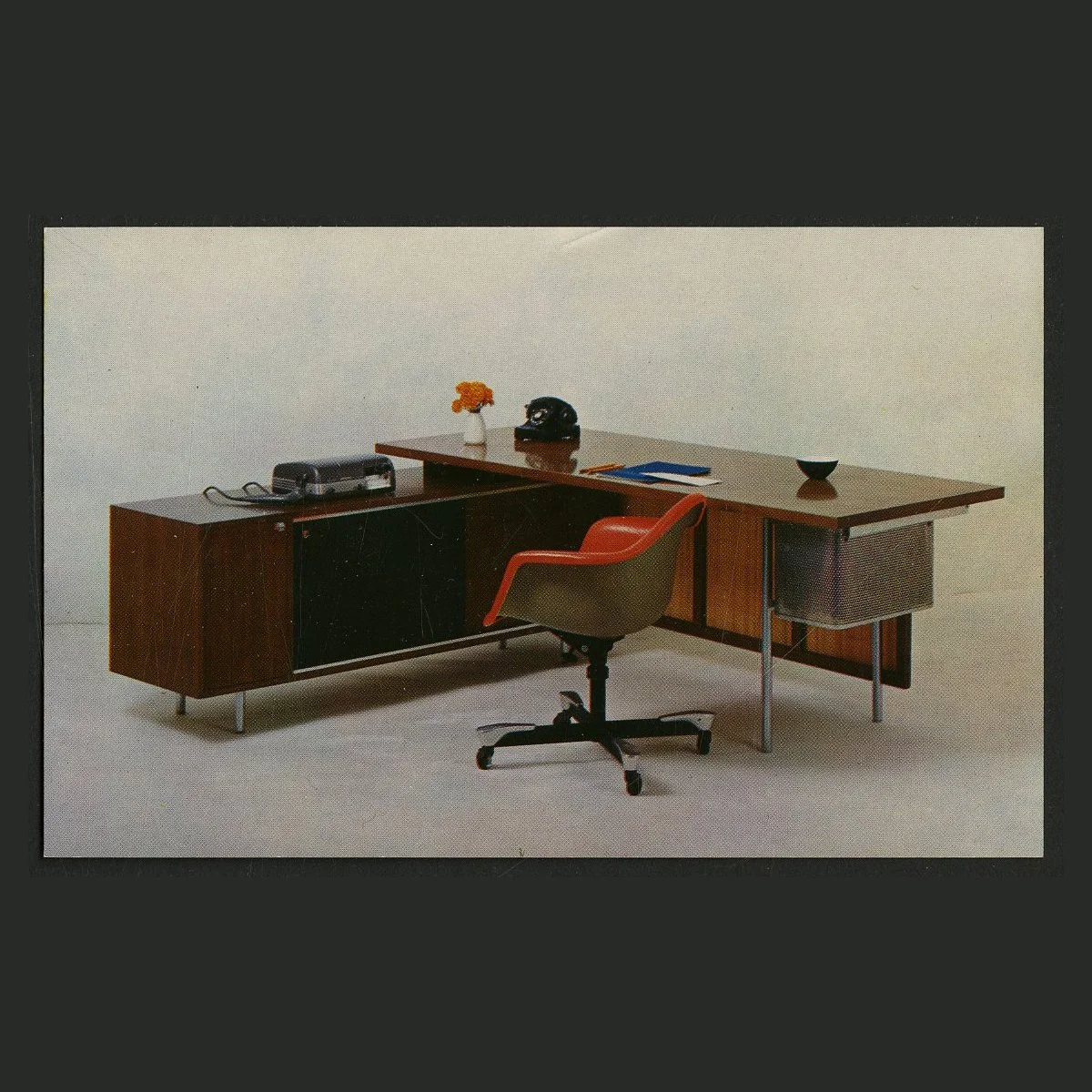 Image 6 of 13
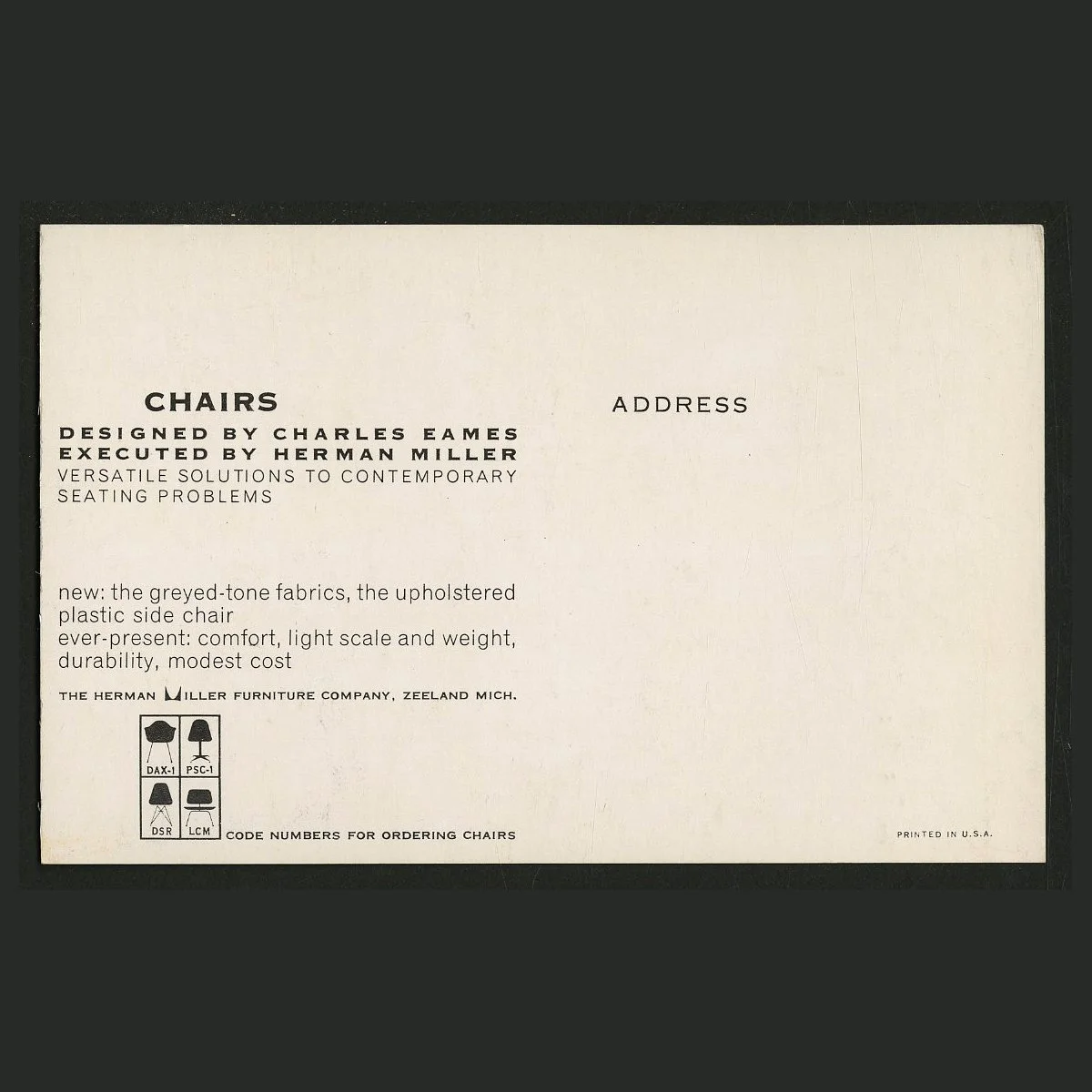 Image 7 of 13
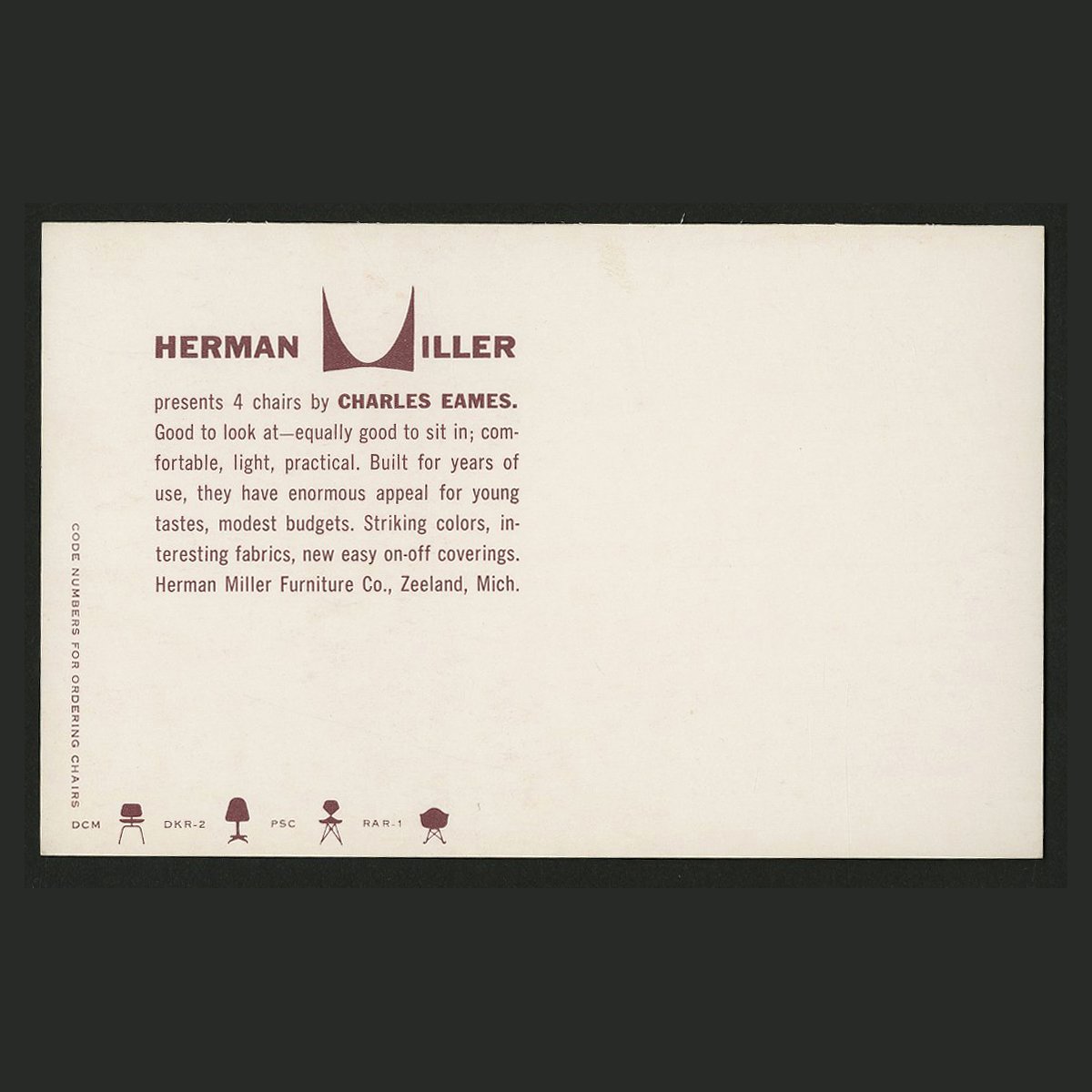 Image 8 of 13
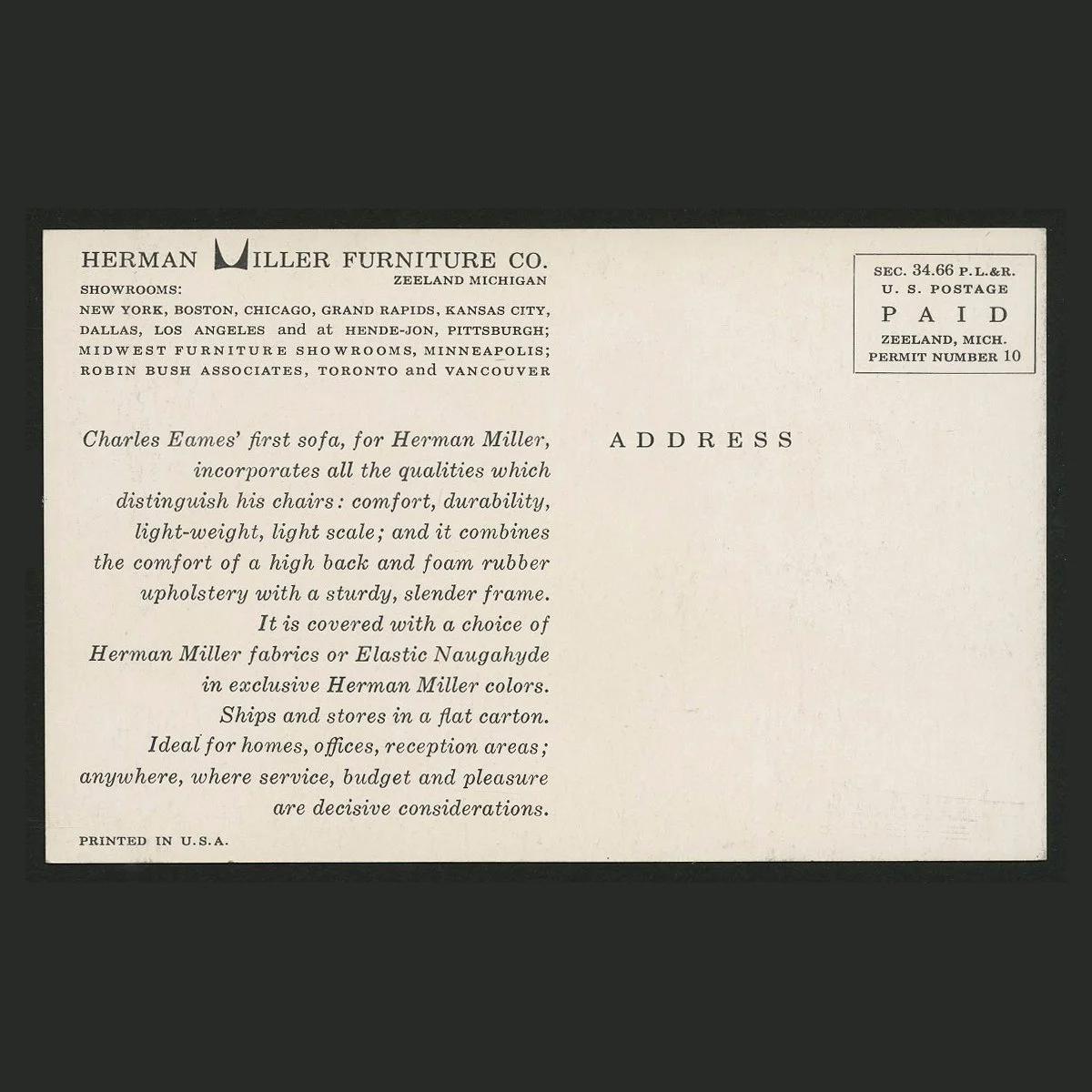 Image 9 of 13
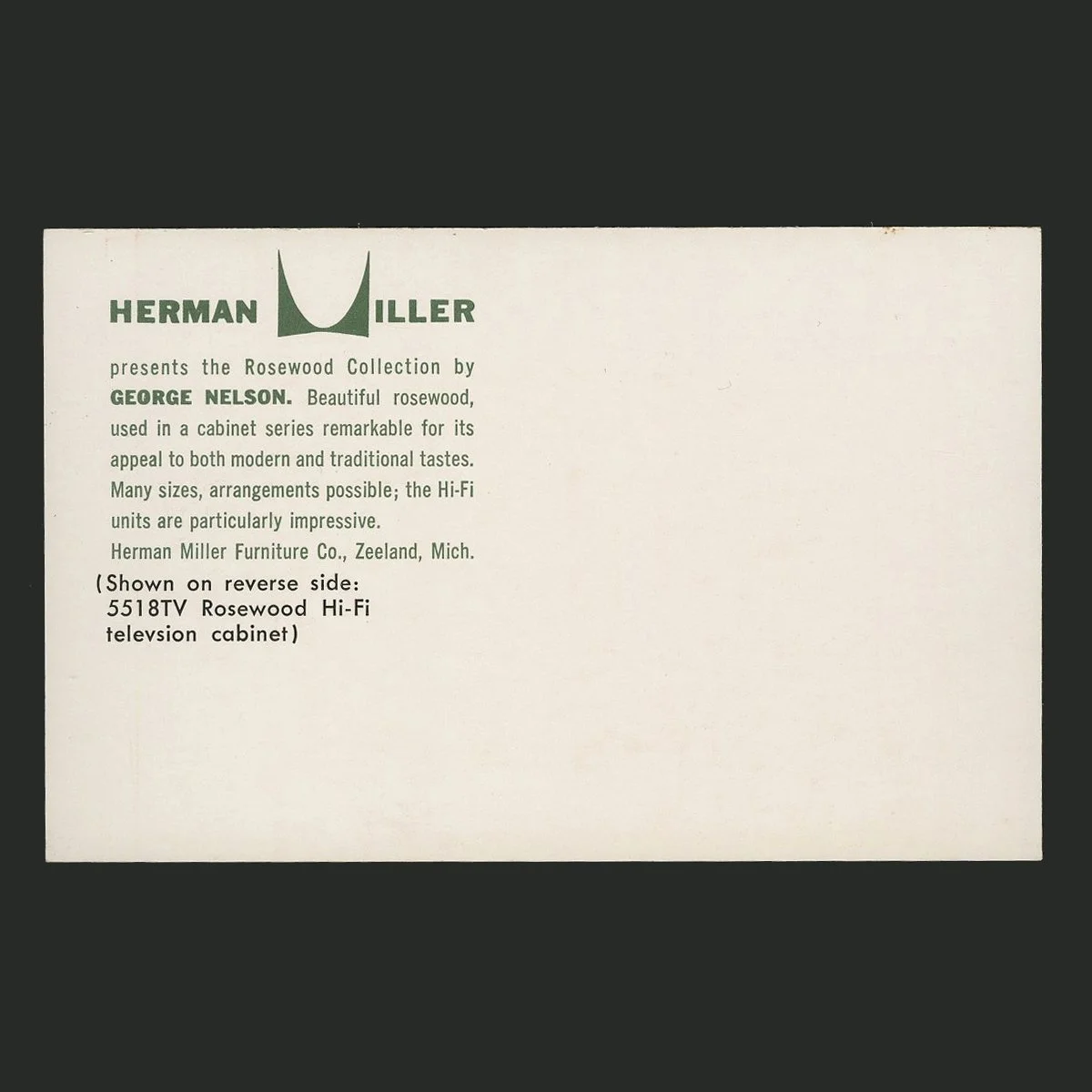 Image 10 of 13
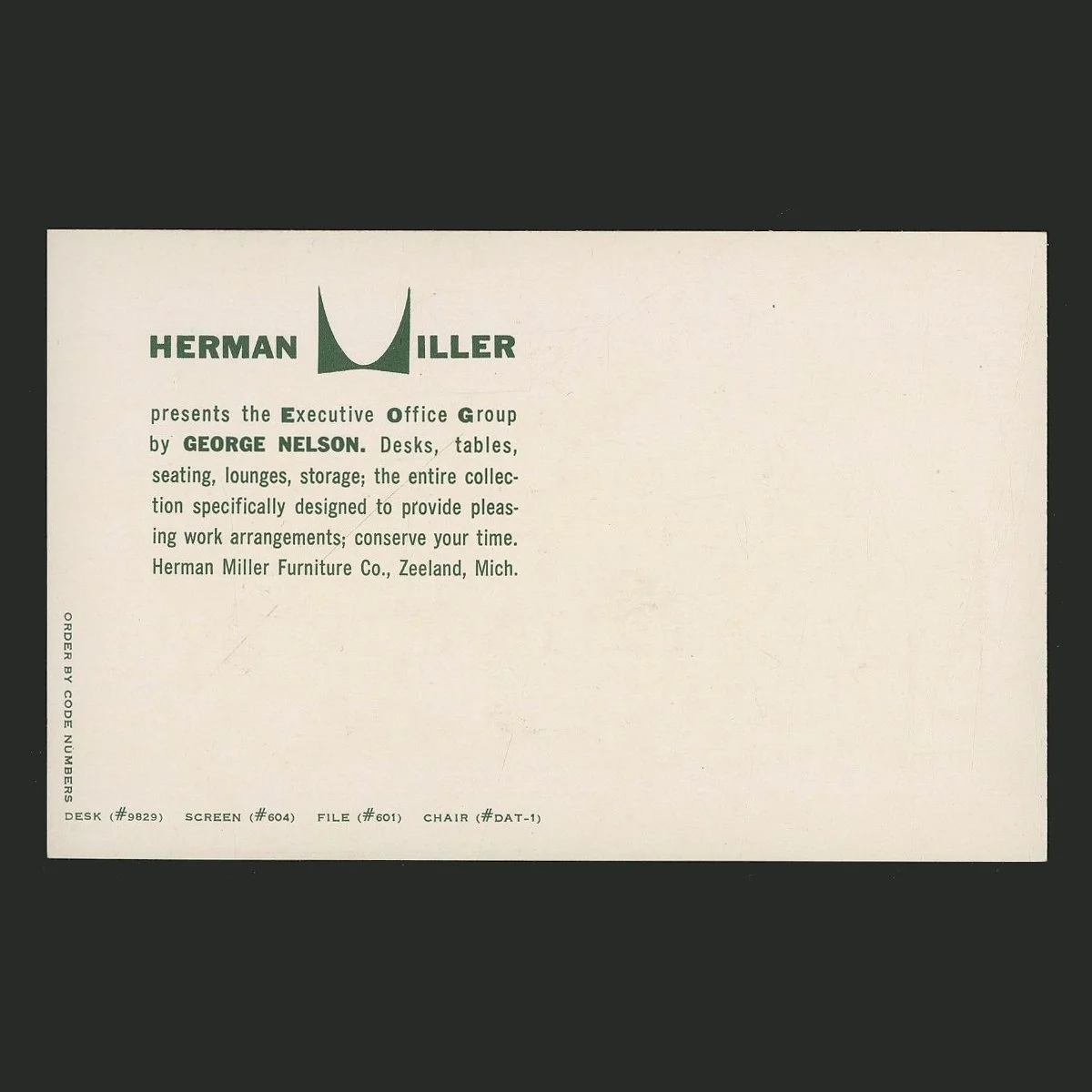 Image 11 of 13
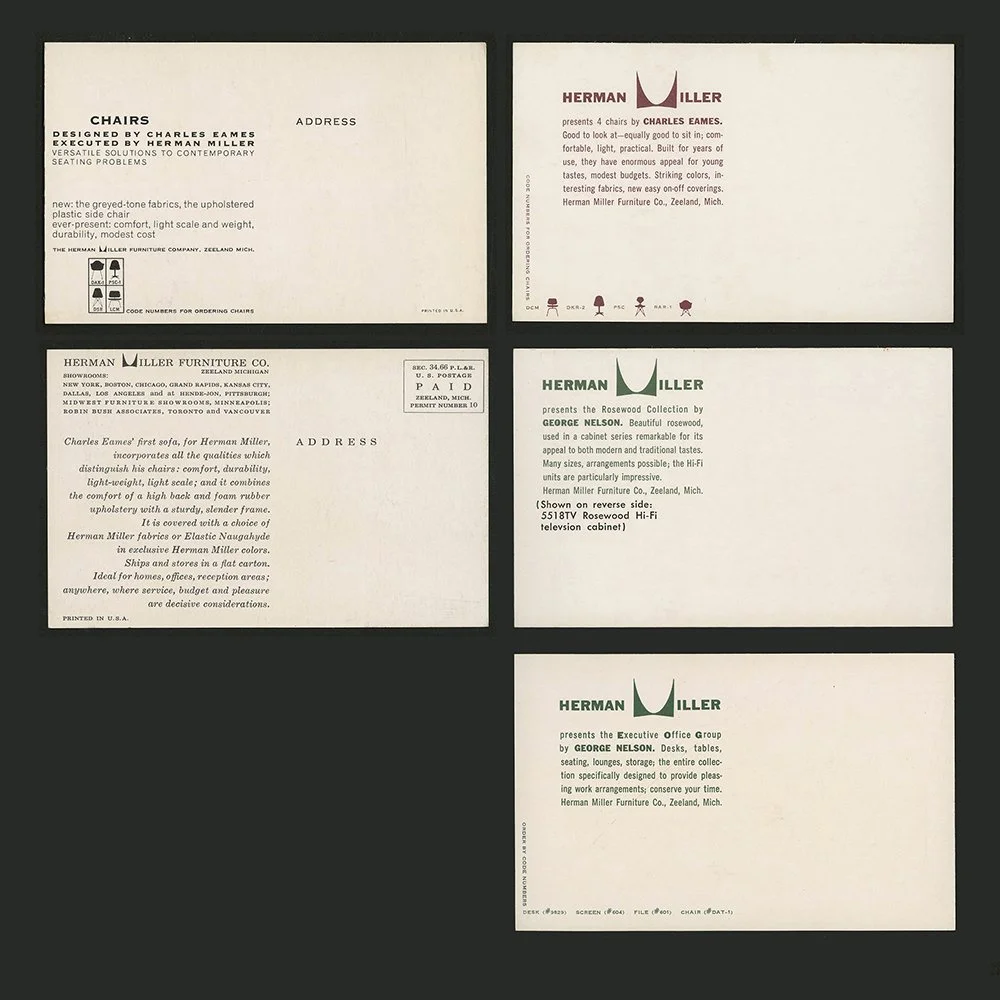 Image 12 of 13
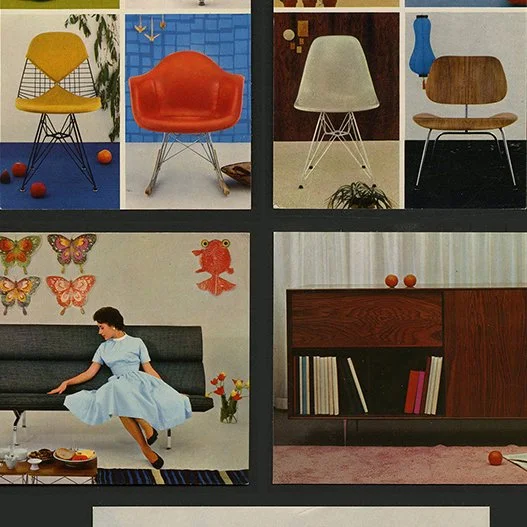 Image 13 of 13
Herman Miller Furniture Company: Color Promotional Postcards [x 5]. Zeeland, MI: The Herman Miller Furniture Company [1954 – 1956].
Color Promotional Postcards [x 5]
The Herman Miller Furniture Company
Zeeland, MI: The Herman Miller Furniture Company [1954 – 1956]. Original editions. [5] Commercial 3.5 x 6-inch postcards printed with full bleeds and four color photographic reproductions and single matched colors to versos. Unmarked but from the library of James Prestini. A fine uncirculated set.
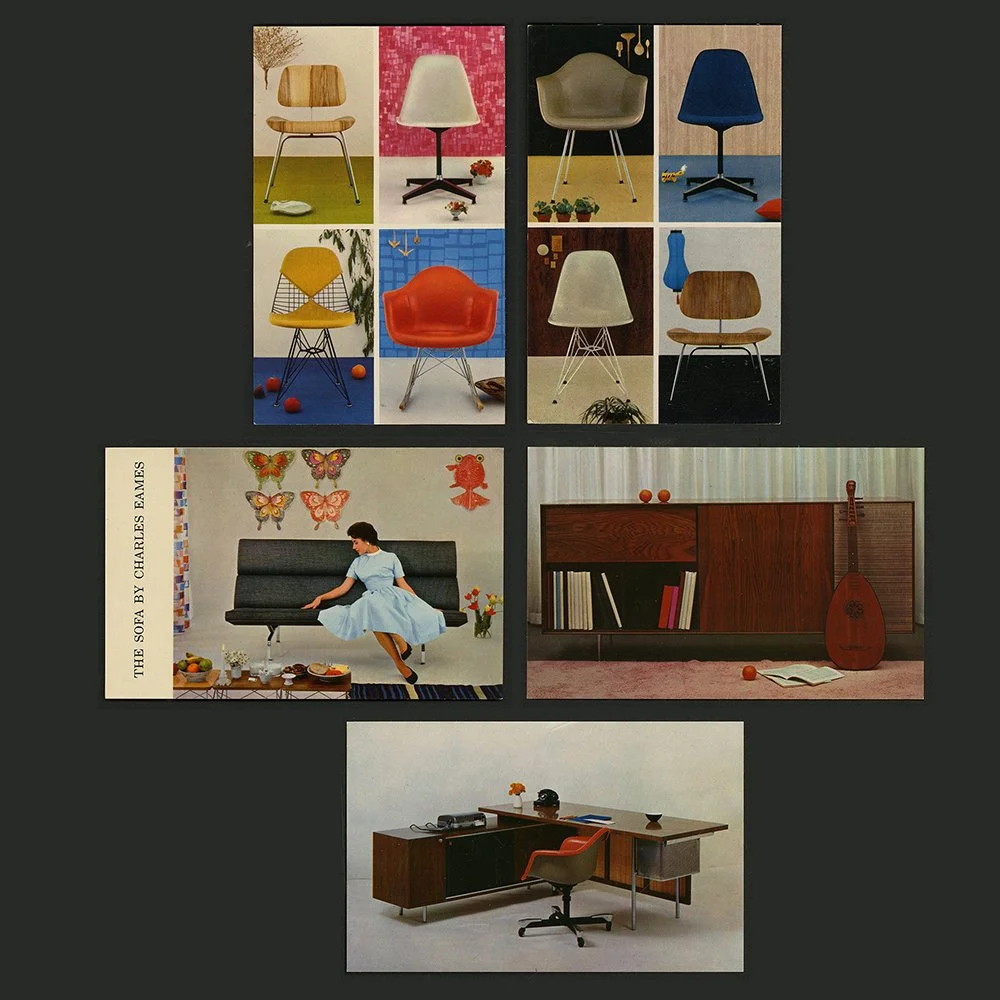
Herman Miller Presents 4 Chairs by Charles Eames: Herman Miller produced marketing postcards featuring four of the Eames chairs in their portfolio, the plywood DCM, Wire DKR, Fiberglass PSC and RAR chairs. The front of the postcard was split into four equal sections with each showing one of the chosen chairs. The images for the card were all highly colorful, selected to provide the maximum contrast between design and interior. The rear of the card gives a short introduction to the pieces and an address section so that they can genuinely be sent by mail to friends, family or perhaps from a store to potential customers.
Chairs Designed by Charles Eames: The second of two postcards Charles and Ray Eames produced for Herman Miller in 1954 to promote their designs. Like the other example, this postcard was created to emphasize how each of the Eameses’ three furniture systems—the molded plywood, molded plastic, and upholstered wire chairs—offered “versatile solutions to contemporary seating problems.” Clockwise from the upper left, there is an upholstered fiberglass armchair with a one piece upholstery pad, or DAX-1, an upholstered PSC-1 side chair, an LCM molded plywood lounge chair with metal legs, and a DSR fiberglass side chair featuring an “Eiffel Tower” base. While the other postcard offers more colorful design configurations and backdrops, here a more reserved approach helps highlight the recently expanded offering of neutrals (as called out on the reverse). Each vignette was painstakingly constructed to best complement the individual design while also working as a unit. Travertine and rosewood tabletops (upper right, and lower left, respectively) are repurposed as backdrops while “humble materials,” such as hand-carved wooden spoons and houseplants humanize and add character to each vignette. Items such as the papier-mâché Japanese tiger toy known as Hariko-No-Tora, gourd-shaped Chinese paper lantern, and selection of antique German Springerle molds speak to the Eameses’ burgeoning international fame and interests.
The Sofa by Charles Eames: In 1954 Charles and Ray Eames introduced their first design for a sofa. Based roughly on the ergonomics and dimensions of the built-in alcove seating in the Eames House living room, the S-73 Sofa Compact was conceived as a low-cost and lightweight solution for sofas in residential and commercial applications. This promotional postcard featured the signature Eames touches such as paper kites, flower arrangements, and an abundant array of fruits, nuts, cheeses, and cigarettes atop three LTR tables, this vignette also highlights the contribution of the newly established Herman Miller Textile Division led by the Eameses’ friend and colleague Alexander Girard. Girard conceived the textile program as a flexible toolkit that included everything from more durable and prosaic woven upholstery fabrics (such as this sofa’s covering, Nubstripe) to delicate screen-printed casements (illustrated here at left by yardage of the 1953 pattern Rain).
Herman Miller Presents the Rosewood Collection by George Nelson: Herman Miller introduced the Rosewood Cabinet Series in 1956 as a luxurious upgrade from Nelson’s Basic Cabinet Series of 1946. With the Basic Cabinet Series, he created a way to accommodate changing needs for storage and surfaces. The size and purpose of a room doesn't matter. The interchangeable components allow you to create beautiful storage solutions for your big great room or your small living room. The system starts small in your small apartment and welcomes additional components if you move into larger spaces. This card notes beautiful rosewood used in the cabinet series “remarkable for its appeal to both modern and traditional tastes. many sizes, arrangements possible; the Hi-Fi units are particularly impressive. This card features a black overprint to verso — (Shown on reverse side: 5518TV Rosewood Hi-Fi television cabinet).
Herman Miller Presents the Executive Office Group by George Nelson: While the Eameses usually saw to the creation of promotional materials related to their designs, they would do so in coordination with George Nelson, who as Herman Miller’s design director was responsible for leading the company’s overall brand image and communications strategy. While this promotional postcard for George Nelson’s Executive Office Group carries no attribution, based on the contextual similarities to other Eames-designed postcards and inclusion of a colorful Eames DAT-1 swiveling and tilting desk chair, it is likely to have been staged, photographed, and designed by the Eames Office.
In a characteristically wry 1944 correspondence with Herman Miller founder, DJ De Pree, George Nelson wrote that “your reservations on my suitability as a designer for Herman Miller Co., impressed me very much for they seem to be well founded… the question of lack of experience in the commercial furniture field is also important, but here, I am afraid, you and your associates will have to make the decision on your own.” Fast forward four years later, and Nelson once again found himself reflecting on the integrity of the Herman Miller Co., but this time, not as a potential hire but rather as Herman Miller’s founding creative director.
In the 1948 introduction to the catalog for his first ever collection for the company, Nelson wrote, “From the viewpoint of the designer, which is the only viewpoint I can assume with any degree of propriety, the Herman Miller Furniture Company is a rather remarkable institution. Seen solely as a business enterprise, it is probably indistinguishable from thousands of others scattered through the U.S. It is a small company, it is located in a small town, its production facilities are adequate but not unusual, and it is run by the people who own it. What is remarkable about this enterprise is its philosophy—an attitude so deeply felt that to the best of my knowledge it has never been formulated.
“Stated in its bare essentials, this philosophy—like others that have been solidly based—is so simple that it sounds almost naïve. But it is not widely held by business, and perhaps it would be naïve if it were not so astonishingly effective. This company today occupies a very solid position as a manufacturer of modern furniture and enjoys a prestige all out of proportion to its size. The attitude that governs Herman Miller’s behavior, as far as I can make out, is compounded of the following set of principles:
“What you make is important. Herman Miller, like all other companies, is governed by the rules of the American economy, but I have yet to see quality of construction or finish skimped to meet a popular price bracket, or for any other reason. Also, while the company has materially expanded its production, the limits of this expansion will be set by the size of the market that will accept Herman Miller’s kind of furniture—the product will not be changed to expand the business.
“Design is an integral part of the business. In this company’s scheme of things, the designer’s decisions are as important as those of the sales or production departments. If the design is changed, it is with the designer’s participation and approval. There is no pressure on him to modify design to meet the market.
“The product must be honest. Herman Miller discontinued production of period reproductions almost twelve years ago because its designer, Gilbert Rohde, had convinced the management that imitation of traditional designs was insincere aesthetically. (I couldn’t believe this story when I first heard it, but after my experience of the past few years, I know it is true.)
“You decide what you will make. Herman Miller has never done any consumer research or any pre-testing of its products to determine what the market “will accept.” If designer and management like a solution to a particular furniture problem, it is put into production. There is no attempt to conform to the so-called norms of “public taste,” nor any special faith in the methods used to evaluate the “buying public.” The reason many people are struck by the freshness of Herman Miller designs is that the company is not playing follow-the-leader. Its designers are therefore not hamstrung by management’s fear of getting out of step. All that is asked of the designer is a valid solution.
“There is a market for good design. This assumption has been more than confirmed, but it took a great deal of courage to make it and stick to it. The fact is that in furniture as in many other fields, there is a substantial segment of the public that is well in advance of the manufacturers. But few producers dare to believe it.
“In this outline of an attitude, you will no doubt recognize several familiar patterns: there is a hint of the craftsman as opposed to the industrialist; there is a suggestion of the “better mousetrap” theory in another form, and the rugged individual with convictions is in evidence throughout. But if the philosophy sounds somewhat archaic, it is interesting to see its manifestations in terms of the furniture shown in this book. It is unlikely that any person would be equally enthusiastic—or unenthusiastic— about every piece shown, but I think it would be difficult not to conclude that the company had a real interest in exploiting some of the possibilities open to furniture today in the areas of design, materials and techniques. The furniture shown here is the result of a program as well as a philosophy. The program includes an assumption that plywood and lumber are only two of a whole range of materials suitable for furniture. A considerable amount of experimental design work is being done on new pieces that explore the possibilities of others. It also assumes that the program is strengthened by the participation of a group of designers who share Herman Miller’s particular attitudes. I believe that the range of the collection—from Noguchi’s sculptured table to Hvidt and Neilsen’s impeccably crafted pieces to Eames’ magnificent designs in molded wood, metal, and plastic—could never be encompassed by a single designer, for the various underlying approaches, while related, are too intensely personal. A final word on the Herman Miller program: its goal is a permanent collection designed to meet fully the requirements for modern living. The collection is to be permanent in the sense that it will not be scrapped for each market, or for each new “trend” as announced by the style experts. It is designed to grow, not necessarily in size, but in the perfection of its component parts. No piece will be kept if a better design can be developed to take its place, nor will a given way of making things be followed simply because that’s the way they were always made. Also, ways of living are continually changing. Again, I think, the material in this book suggests the attitude more clearly than any statement.
“There is one other point that may be of interest to those concerned with problems of design: by far the largest part of the collection was designed by people trained in architecture. It may be no more than a coincidence, and I must certainly confess a prejudice in this regard, but there is this to be said for the architectural approach to any design problem, and particularly that of furniture: the problem is never seen in isolation. The design process is always related on the one hand to the houses or other structures in which the furniture is to be used, and on the other to the people who will use it. When successfully followed through, the approach of the architect-in-industry goes much deeper than styling and is far more likely to create trends than to follow them. To reinforce this point it is not necessary to use only the Herman Miller program as an example. The work of Alvar Aalto, Marcel Breuer, Eero Saarinen and many others could be cited.
Color Promotional Postcards [x 5]
The Herman Miller Furniture Company
Zeeland, MI: The Herman Miller Furniture Company [1954 – 1956]. Original editions. [5] Commercial 3.5 x 6-inch postcards printed with full bleeds and four color photographic reproductions and single matched colors to versos. Unmarked but from the library of James Prestini. A fine uncirculated set.
Herman Miller Presents 4 Chairs by Charles Eames: Herman Miller produced marketing postcards featuring four of the Eames chairs in their portfolio, the plywood DCM, Wire DKR, Fiberglass PSC and RAR chairs. The front of the postcard was split into four equal sections with each showing one of the chosen chairs. The images for the card were all highly colorful, selected to provide the maximum contrast between design and interior. The rear of the card gives a short introduction to the pieces and an address section so that they can genuinely be sent by mail to friends, family or perhaps from a store to potential customers.
Chairs Designed by Charles Eames: The second of two postcards Charles and Ray Eames produced for Herman Miller in 1954 to promote their designs. Like the other example, this postcard was created to emphasize how each of the Eameses’ three furniture systems—the molded plywood, molded plastic, and upholstered wire chairs—offered “versatile solutions to contemporary seating problems.” Clockwise from the upper left, there is an upholstered fiberglass armchair with a one piece upholstery pad, or DAX-1, an upholstered PSC-1 side chair, an LCM molded plywood lounge chair with metal legs, and a DSR fiberglass side chair featuring an “Eiffel Tower” base. While the other postcard offers more colorful design configurations and backdrops, here a more reserved approach helps highlight the recently expanded offering of neutrals (as called out on the reverse). Each vignette was painstakingly constructed to best complement the individual design while also working as a unit. Travertine and rosewood tabletops (upper right, and lower left, respectively) are repurposed as backdrops while “humble materials,” such as hand-carved wooden spoons and houseplants humanize and add character to each vignette. Items such as the papier-mâché Japanese tiger toy known as Hariko-No-Tora, gourd-shaped Chinese paper lantern, and selection of antique German Springerle molds speak to the Eameses’ burgeoning international fame and interests.
The Sofa by Charles Eames: In 1954 Charles and Ray Eames introduced their first design for a sofa. Based roughly on the ergonomics and dimensions of the built-in alcove seating in the Eames House living room, the S-73 Sofa Compact was conceived as a low-cost and lightweight solution for sofas in residential and commercial applications. This promotional postcard featured the signature Eames touches such as paper kites, flower arrangements, and an abundant array of fruits, nuts, cheeses, and cigarettes atop three LTR tables, this vignette also highlights the contribution of the newly established Herman Miller Textile Division led by the Eameses’ friend and colleague Alexander Girard. Girard conceived the textile program as a flexible toolkit that included everything from more durable and prosaic woven upholstery fabrics (such as this sofa’s covering, Nubstripe) to delicate screen-printed casements (illustrated here at left by yardage of the 1953 pattern Rain).
Herman Miller Presents the Rosewood Collection by George Nelson: Herman Miller introduced the Rosewood Cabinet Series in 1956 as a luxurious upgrade from Nelson’s Basic Cabinet Series of 1946. With the Basic Cabinet Series, he created a way to accommodate changing needs for storage and surfaces. The size and purpose of a room doesn't matter. The interchangeable components allow you to create beautiful storage solutions for your big great room or your small living room. The system starts small in your small apartment and welcomes additional components if you move into larger spaces. This card notes beautiful rosewood used in the cabinet series “remarkable for its appeal to both modern and traditional tastes. many sizes, arrangements possible; the Hi-Fi units are particularly impressive. This card features a black overprint to verso — (Shown on reverse side: 5518TV Rosewood Hi-Fi television cabinet).
Herman Miller Presents the Executive Office Group by George Nelson: While the Eameses usually saw to the creation of promotional materials related to their designs, they would do so in coordination with George Nelson, who as Herman Miller’s design director was responsible for leading the company’s overall brand image and communications strategy. While this promotional postcard for George Nelson’s Executive Office Group carries no attribution, based on the contextual similarities to other Eames-designed postcards and inclusion of a colorful Eames DAT-1 swiveling and tilting desk chair, it is likely to have been staged, photographed, and designed by the Eames Office.
In a characteristically wry 1944 correspondence with Herman Miller founder, DJ De Pree, George Nelson wrote that “your reservations on my suitability as a designer for Herman Miller Co., impressed me very much for they seem to be well founded… the question of lack of experience in the commercial furniture field is also important, but here, I am afraid, you and your associates will have to make the decision on your own.” Fast forward four years later, and Nelson once again found himself reflecting on the integrity of the Herman Miller Co., but this time, not as a potential hire but rather as Herman Miller’s founding creative director.
In the 1948 introduction to the catalog for his first ever collection for the company, Nelson wrote, “From the viewpoint of the designer, which is the only viewpoint I can assume with any degree of propriety, the Herman Miller Furniture Company is a rather remarkable institution. Seen solely as a business enterprise, it is probably indistinguishable from thousands of others scattered through the U.S. It is a small company, it is located in a small town, its production facilities are adequate but not unusual, and it is run by the people who own it. What is remarkable about this enterprise is its philosophy—an attitude so deeply felt that to the best of my knowledge it has never been formulated.
“Stated in its bare essentials, this philosophy—like others that have been solidly based—is so simple that it sounds almost naïve. But it is not widely held by business, and perhaps it would be naïve if it were not so astonishingly effective. This company today occupies a very solid position as a manufacturer of modern furniture and enjoys a prestige all out of proportion to its size. The attitude that governs Herman Miller’s behavior, as far as I can make out, is compounded of the following set of principles:
“What you make is important. Herman Miller, like all other companies, is governed by the rules of the American economy, but I have yet to see quality of construction or finish skimped to meet a popular price bracket, or for any other reason. Also, while the company has materially expanded its production, the limits of this expansion will be set by the size of the market that will accept Herman Miller’s kind of furniture—the product will not be changed to expand the business.
“Design is an integral part of the business. In this company’s scheme of things, the designer’s decisions are as important as those of the sales or production departments. If the design is changed, it is with the designer’s participation and approval. There is no pressure on him to modify design to meet the market.
“The product must be honest. Herman Miller discontinued production of period reproductions almost twelve years ago because its designer, Gilbert Rohde, had convinced the management that imitation of traditional designs was insincere aesthetically. (I couldn’t believe this story when I first heard it, but after my experience of the past few years, I know it is true.)
“You decide what you will make. Herman Miller has never done any consumer research or any pre-testing of its products to determine what the market “will accept.” If designer and management like a solution to a particular furniture problem, it is put into production. There is no attempt to conform to the so-called norms of “public taste,” nor any special faith in the methods used to evaluate the “buying public.” The reason many people are struck by the freshness of Herman Miller designs is that the company is not playing follow-the-leader. Its designers are therefore not hamstrung by management’s fear of getting out of step. All that is asked of the designer is a valid solution.
“There is a market for good design. This assumption has been more than confirmed, but it took a great deal of courage to make it and stick to it. The fact is that in furniture as in many other fields, there is a substantial segment of the public that is well in advance of the manufacturers. But few producers dare to believe it.
“In this outline of an attitude, you will no doubt recognize several familiar patterns: there is a hint of the craftsman as opposed to the industrialist; there is a suggestion of the “better mousetrap” theory in another form, and the rugged individual with convictions is in evidence throughout. But if the philosophy sounds somewhat archaic, it is interesting to see its manifestations in terms of the furniture shown in this book. It is unlikely that any person would be equally enthusiastic—or unenthusiastic— about every piece shown, but I think it would be difficult not to conclude that the company had a real interest in exploiting some of the possibilities open to furniture today in the areas of design, materials and techniques. The furniture shown here is the result of a program as well as a philosophy. The program includes an assumption that plywood and lumber are only two of a whole range of materials suitable for furniture. A considerable amount of experimental design work is being done on new pieces that explore the possibilities of others. It also assumes that the program is strengthened by the participation of a group of designers who share Herman Miller’s particular attitudes. I believe that the range of the collection—from Noguchi’s sculptured table to Hvidt and Neilsen’s impeccably crafted pieces to Eames’ magnificent designs in molded wood, metal, and plastic—could never be encompassed by a single designer, for the various underlying approaches, while related, are too intensely personal. A final word on the Herman Miller program: its goal is a permanent collection designed to meet fully the requirements for modern living. The collection is to be permanent in the sense that it will not be scrapped for each market, or for each new “trend” as announced by the style experts. It is designed to grow, not necessarily in size, but in the perfection of its component parts. No piece will be kept if a better design can be developed to take its place, nor will a given way of making things be followed simply because that’s the way they were always made. Also, ways of living are continually changing. Again, I think, the material in this book suggests the attitude more clearly than any statement.
“There is one other point that may be of interest to those concerned with problems of design: by far the largest part of the collection was designed by people trained in architecture. It may be no more than a coincidence, and I must certainly confess a prejudice in this regard, but there is this to be said for the architectural approach to any design problem, and particularly that of furniture: the problem is never seen in isolation. The design process is always related on the one hand to the houses or other structures in which the furniture is to be used, and on the other to the people who will use it. When successfully followed through, the approach of the architect-in-industry goes much deeper than styling and is far more likely to create trends than to follow them. To reinforce this point it is not necessary to use only the Herman Miller program as an example. The work of Alvar Aalto, Marcel Breuer, Eero Saarinen and many others could be cited.