GOOD DESIGN IN SWITZERLAND
Traveling Exhibition of the Swiss Werkbund
Alfred Roth [introduction], Richard P. Lohse [Designer]
Zürich: the Swiss Werkbund for the Smithsonian Institution, 1957. Original edition. Landscape quarto. Printed saddle stitched matte wrappers. 44 pp. Illustrated catalog of the traveling exhibition organized by the Swiss Werkbund (Schweizerischer Werkbund / SWB) featuring 42 black and white halftones featuring the principles of postwar Swiss functionalism, minimalist aesthetics, and the concept of Die gute Form ("The Good Form") to global audiences. Wrappers curling to fore edge and spine stressed from binding staples, but a very good or better copy.
8.25 – 5.85-inch saddle stitched catalog with 44 pages and 42 black and white halftones. Catalog designed by Richard P. Lohse. Exhibition design by Alfred Altherr, Jr. Acknowledgements by Annemarie H. Pope of the Smithsonian Institution. Good Design in Switzerland was managed by the Swiss Werkbund and spearheaded by Alfred Altherr, Jr. (then managing director of the SWB and director of the Zurich Museum of Applied Arts).
In 1957, the Smithsonian Institution Traveling Exhibition Service (SITES) brought the collection to the United States. It traveled to major American institutions—such as the J.B. Speed Art Museum in Louisville, Kentucky—introducing American designers and consumers to Swiss modernist home products, furniture, and appliances.
“The international touring exhibition Die gute Form was conceived by Max Bill on behalf of the Swiss Werkbund and was shown for the first time in 1949 at the Basel Mustermesse trade fair. The exhibition consisted of 80 display panels, designed by Bill presenting a selection of consumer goods from all over the world chosen by Bill as examples of good design. The show caused some upset in Switzerland and fuelled heated debates abroad. But it also exerted a wide-reaching influence – for example, upon the way in which consumer goods were perceived. This publication documents Bill’s initiative in reproductions of the original display panels and layout plans for the venues visited by the exhibition, and places Die gute Form in a theoretical context that considers its reception and impact within the history of design.’ —Lars Müller
Richard Paul Lohse (Zürich, September 13, 1902 – September 16, 1988) was a Swiss painter and graphic artist and one of the main representatives of the concrete and constructive art movements. In the 1930s, his work as a graphic artist and book designer placed him among the pioneers of modern Swiss graphic design; in paintings of this period, he worked on curved and diagonal constructions. Success eventually allowed him to establish his own graphic design studio in Zürich.
He combined art with a political and moral awareness, which led him to be an activist for immigrants. In the 1930s, he was actively involved in protests, which were illegal under the government of the time. He continued to protest until the beginning of World War II. In 1937, Lohse co-founded Allianz, an association of Swiss modern artists, with Leo Leuppi. Through this organization, he became a colleague of Anna Indermaur. In 1938, he helped Irmgard Burchard, to whom he was married for a brief time, to organise the London exhibition "Twentieth Century German Art.”His political convictions then led him into the resistance movement, where he met his future wife Ida Alis Dürner.
The year 1943 marked a breakthrough in Lohse's painting: he standardized the pictorial means and started to develop modular and serial systems. In 1953, he published the book New Design in Exhibitions.
In 1958, one year after this catalog was published, four Zurich-based graphic designers launched a Graphic Design journal, Neue Grafik. These designers were Richard Paul Lohse, Josef Muller-Brockmann (1914 – 1996), Hans Neuburg (1904– 1983), and Carlo Vivarelli (1919 – 1986). These designer/editors signed some of their jointly written articles with the acronym LMNV, formed from their initials. Neue Grafik ceased publication in 1965 after issue 17/18.
GOOD DESIGN IN SWITZERLAND
Traveling Exhibition of the Swiss Werkbund
Alfred Roth [introduction], Richard P. Lohse [Designer]
Zürich: the Swiss Werkbund for the Smithsonian Institution, 1957. Original edition. Landscape quarto. Printed saddle stitched matte wrappers. 44 pp. Illustrated catalog of the traveling exhibition organized by the Swiss Werkbund (Schweizerischer Werkbund / SWB) featuring 42 black and white halftones featuring the principles of postwar Swiss functionalism, minimalist aesthetics, and the concept of Die gute Form ("The Good Form") to global audiences. Wrappers curling to fore edge and spine stressed from binding staples, but a very good or better copy.
8.25 – 5.85-inch saddle stitched catalog with 44 pages and 42 black and white halftones. Catalog designed by Richard P. Lohse. Exhibition design by Alfred Altherr, Jr. Acknowledgements by Annemarie H. Pope of the Smithsonian Institution. Good Design in Switzerland was managed by the Swiss Werkbund and spearheaded by Alfred Altherr, Jr. (then managing director of the SWB and director of the Zurich Museum of Applied Arts).
In 1957, the Smithsonian Institution Traveling Exhibition Service (SITES) brought the collection to the United States. It traveled to major American institutions—such as the J.B. Speed Art Museum in Louisville, Kentucky—introducing American designers and consumers to Swiss modernist home products, furniture, and appliances.
“The international touring exhibition Die gute Form was conceived by Max Bill on behalf of the Swiss Werkbund and was shown for the first time in 1949 at the Basel Mustermesse trade fair. The exhibition consisted of 80 display panels, designed by Bill presenting a selection of consumer goods from all over the world chosen by Bill as examples of good design. The show caused some upset in Switzerland and fuelled heated debates abroad. But it also exerted a wide-reaching influence – for example, upon the way in which consumer goods were perceived. This publication documents Bill’s initiative in reproductions of the original display panels and layout plans for the venues visited by the exhibition, and places Die gute Form in a theoretical context that considers its reception and impact within the history of design.’ —Lars Müller
Richard Paul Lohse (Zürich, September 13, 1902 – September 16, 1988) was a Swiss painter and graphic artist and one of the main representatives of the concrete and constructive art movements. In the 1930s, his work as a graphic artist and book designer placed him among the pioneers of modern Swiss graphic design; in paintings of this period, he worked on curved and diagonal constructions. Success eventually allowed him to establish his own graphic design studio in Zürich.
He combined art with a political and moral awareness, which led him to be an activist for immigrants. In the 1930s, he was actively involved in protests, which were illegal under the government of the time. He continued to protest until the beginning of World War II. In 1937, Lohse co-founded Allianz, an association of Swiss modern artists, with Leo Leuppi. Through this organization, he became a colleague of Anna Indermaur. In 1938, he helped Irmgard Burchard, to whom he was married for a brief time, to organise the London exhibition "Twentieth Century German Art.”His political convictions then led him into the resistance movement, where he met his future wife Ida Alis Dürner.
The year 1943 marked a breakthrough in Lohse's painting: he standardized the pictorial means and started to develop modular and serial systems. In 1953, he published the book New Design in Exhibitions.
In 1958, one year after this catalog was published, four Zurich-based graphic designers launched a Graphic Design journal, Neue Grafik. These designers were Richard Paul Lohse, Josef Muller-Brockmann (1914 – 1996), Hans Neuburg (1904– 1983), and Carlo Vivarelli (1919 – 1986). These designer/editors signed some of their jointly written articles with the acronym LMNV, formed from their initials. Neue Grafik ceased publication in 1965 after issue 17/18.

 Image 1 of 12
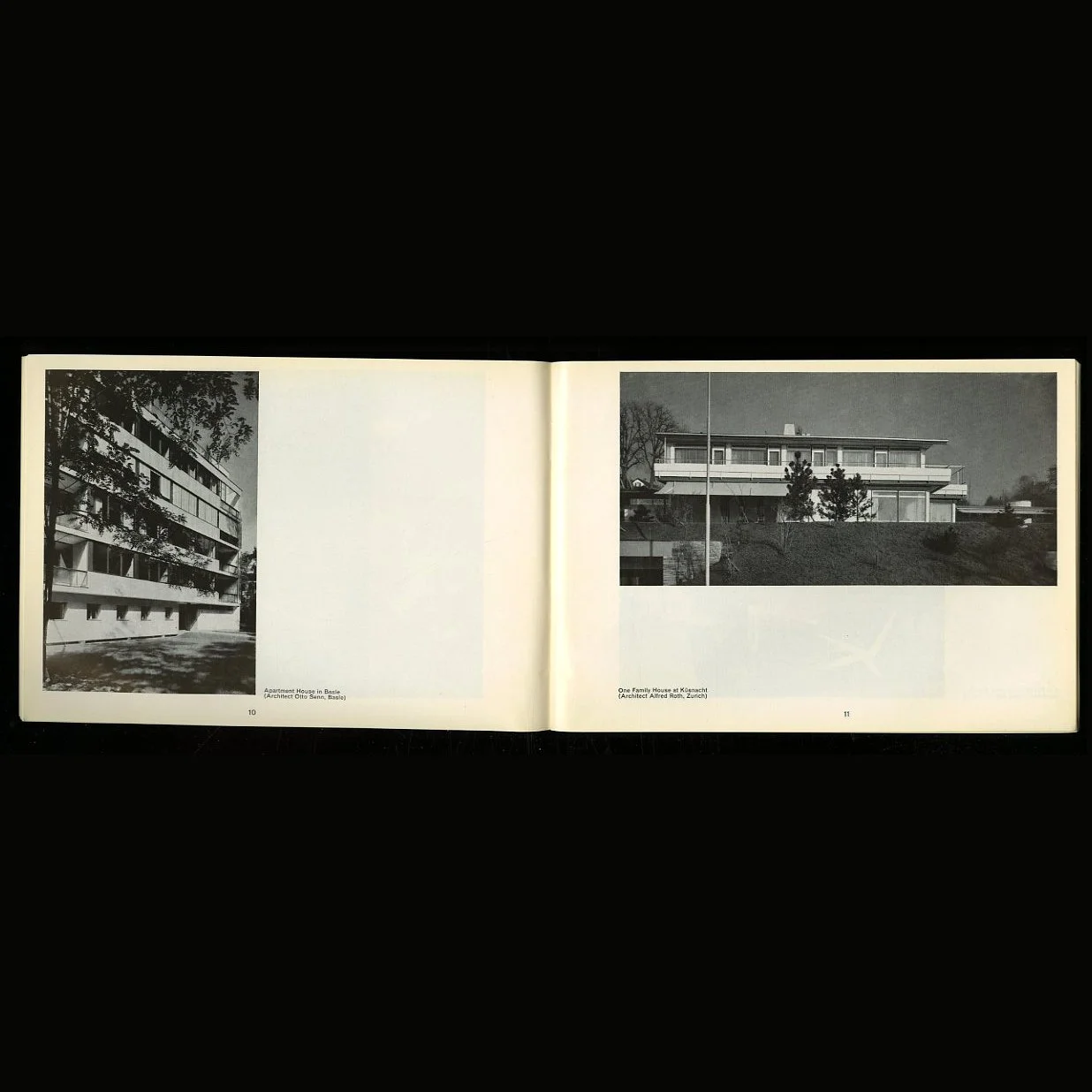 Image 2 of 12
 Image 3 of 12
 Image 4 of 12
 Image 5 of 12
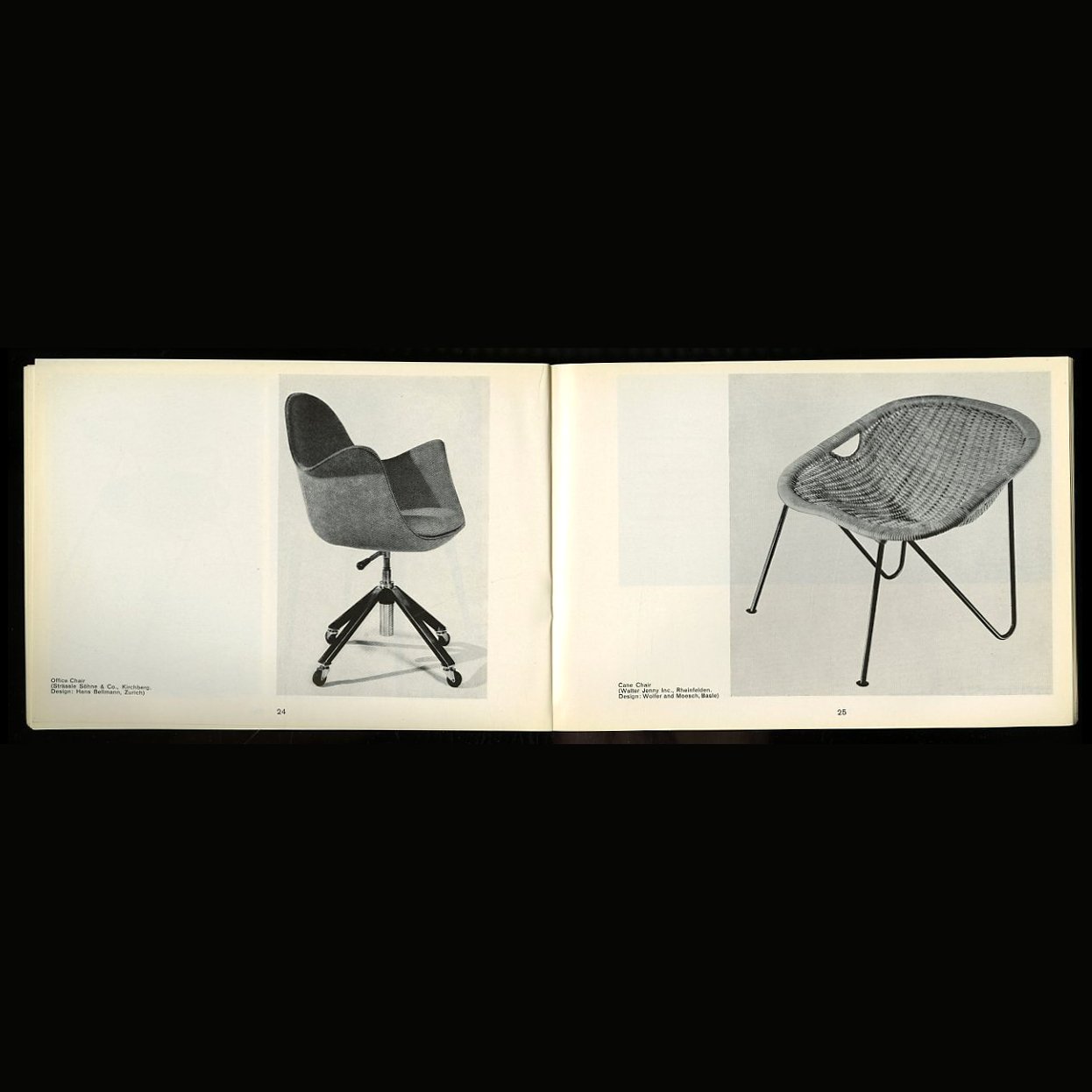 Image 6 of 12
 Image 7 of 12
 Image 8 of 12
 Image 9 of 12
 Image 10 of 12
 Image 11 of 12
 Image 12 of 12