
 Image 1 of 3
 Image 2 of 3
 Image 3 of 3
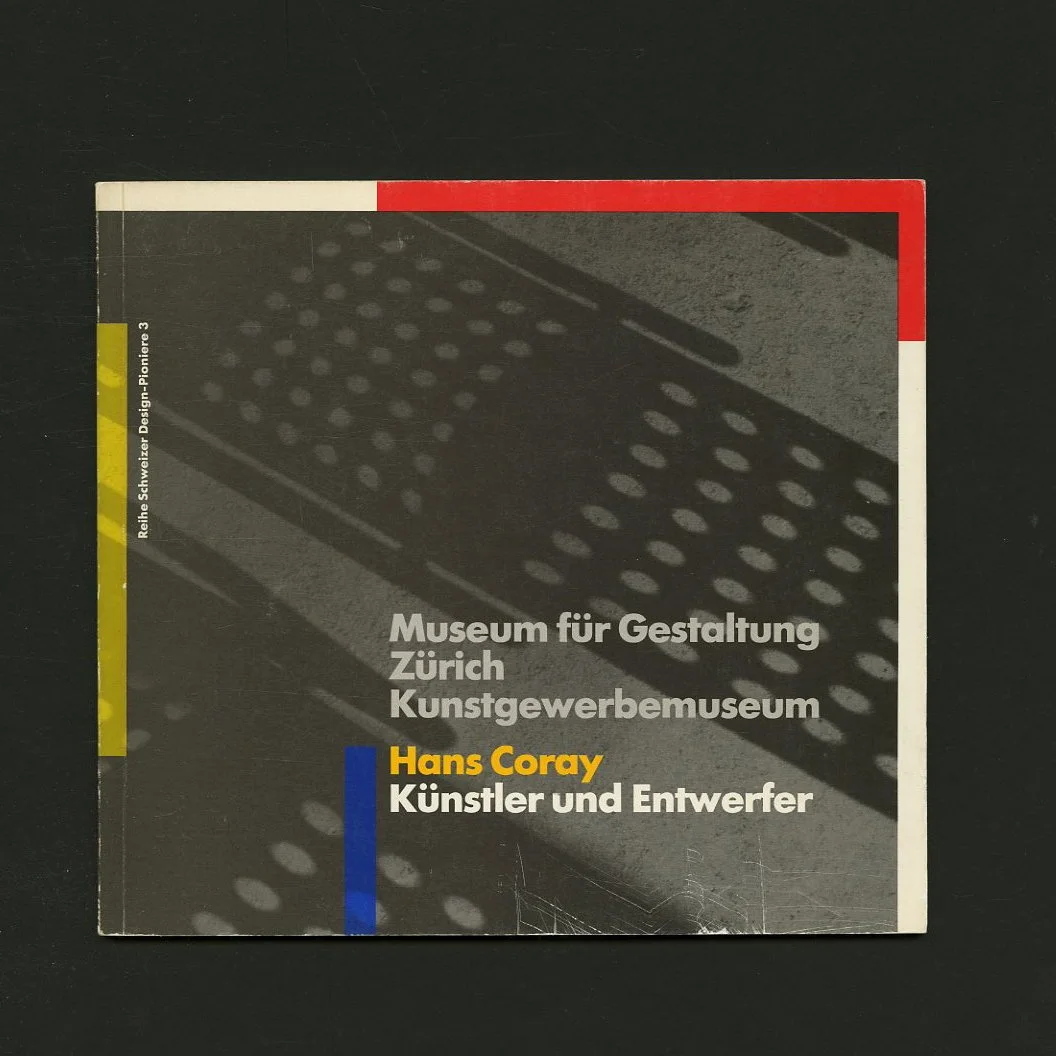
Zürich: Museum für Gestaltung, Kunstgewerbemuseum, 1986. Text in German. Square quarto. Photo illustrated wrappers. 60 pp. Fully illustrated in black and white. Wrappers lightly edgeworn, but a nearly fine copy of this scarce exhibition catalog.
8.75 x 8-inch softcover book with 60 pages devoted to the industrial designs of Hans Coray, with an essay by Max Bill titled “der landi-schul dem coray,” an essay by Erwin Mühlestein, “Hans Coray— sein Einfluss auf andere Gestalter,” and a foreword by Hansjörg Budliger. Catalog for the exhibition at the Zürich Museum für Gestaltung from August 20 to October 5, 1986.
Hans Coray (Zürich, 1906 – 1991) was a Swiss artist and furniture designer best known for designing the Landi chair for the Swiss National Exhibition of 1939. The Landi chair, an all-aluminum stacking chair was the first design of Coray’s to be put into production, after he had spent much of the 1930s experimenting with the use of sheet metal and industrial processes of production. In addition to the Landi chair, Coray designed furniture for industrial production, including pieces for the line ‘für den Wohnbedarf,’ and worked as a painter, sculptor and art dealer.
Coray was also associated with the Art Concret movement, founded by Theo van Doesburg in 1930 and continued after his death in 1931 by artists such as Hans Fischli and Max Bill. Art Concret focused on art being universal, anti-impressionistic and without “lyricism, drama, symbolism and so on.” These maxims guided Coray in creating works of collective appeal, functionality and simplicity. In the 1950s, Coray returned to figurative art and passed away in 1991 in his native Zürich.
Zürich: Museum für Gestaltung, Kunstgewerbemuseum, 1986. Text in German. Square quarto. Photo illustrated wrappers. 60 pp. Fully illustrated in black and white. Wrappers lightly edgeworn, but a nearly fine copy of this scarce exhibition catalog.
8.75 x 8-inch softcover book with 60 pages devoted to the industrial designs of Hans Coray, with an essay by Max Bill titled “der landi-schul dem coray,” an essay by Erwin Mühlestein, “Hans Coray— sein Einfluss auf andere Gestalter,” and a foreword by Hansjörg Budliger. Catalog for the exhibition at the Zürich Museum für Gestaltung from August 20 to October 5, 1986.
Hans Coray (Zürich, 1906 – 1991) was a Swiss artist and furniture designer best known for designing the Landi chair for the Swiss National Exhibition of 1939. The Landi chair, an all-aluminum stacking chair was the first design of Coray’s to be put into production, after he had spent much of the 1930s experimenting with the use of sheet metal and industrial processes of production. In addition to the Landi chair, Coray designed furniture for industrial production, including pieces for the line ‘für den Wohnbedarf,’ and worked as a painter, sculptor and art dealer.
Coray was also associated with the Art Concret movement, founded by Theo van Doesburg in 1930 and continued after his death in 1931 by artists such as Hans Fischli and Max Bill. Art Concret focused on art being universal, anti-impressionistic and without “lyricism, drama, symbolism and so on.” These maxims guided Coray in creating works of collective appeal, functionality and simplicity. In the 1950s, Coray returned to figurative art and passed away in 1991 in his native Zürich.