MAGIC MOTORWAYS
Norman Bel Geddes
New York: Random House, 1940. First edition. Quarto. Tan fabricoid cloth decorated in maroon. Photographically printed dust jacket. 298 pp. 206 black and white illustrations. Endpapers and gutters discolored [as usual] due to binding paper choice. Dust jacket rubbed and lightly chipped with a little bit of loss. Textblock slightly tacky to a few leaves with no sticky problems. A very good copy in a very good dust jacket: a nice copy of this legendary early treatise on the problems of modern transportation.
8.25 x 10.5 hardcover book with 298 pages and 206 black and white photographs, diagrams, illustrations and plans of the general social concepts that developed through Bel Geddes' stewardship of the FUTURAMA exhibit at the 1939 New York World's Fair. The majority of the photographs are detail shots from the Futurama exhibit by Richard Garrison.
Contents:
Highways and Horizons
Safety Comfort Speed and Economy
Eliminate the Human Factor in Driving
Separated Lanes of Traffic
Every Highway Intersection is Obsolete
Full Speed Through Bottlenecks
Daylight Standards for Night Driving
From The Atlantic to the Pacific in One Day
Eliminate Graft and Double Highway Construction
Motorway Services to Towns and Villages
Motorway Tributaries to Cities
Accelerating City Traffic One Hundred Percent
The Need for Increased Distribution
Thinking for our Grandchildren
Effects of a National Motorway System
American theatrical and industrial designer Norman Bel Geddes (United States, 1893 – 1958) was the first person to seriously apply the concepts of aerodynamics and streamlining to industrial design. To Geddes, streamlining illustrated courage: "We are too much inclined to believe, because things have long been done a certain way, that that is the best way to do them. Following old grooves of thought is one method of playing safe. But it deprives one of initiative and takes too long. It sacrifices the value of the element of surprise. At times, the only thing to do is to cut loose and do the unexpected! It takes more even than imagination to be progressive. It takes vision and courage. “
In 1927, Bel Geddes left theatrical design and began designing cars, ships, factories and railways. He rapidly created streamlined forms for objects ranging from gas-ranges to trains, in addition to a revolving restaurant and, in 1929, a 9-deck amphibian airliner that incorporated areas for deck-games, an orchestra, a fully equipped gymnasium and a solarium.
Bel Geddes designed the famous General Motors Pavilion for the 1939 New York Worlds’ Fair, which included the Highway and Horizons exhibit, more commonly known as the “Futurama.”
Bel Geddes expounded a philosophy of "essential forms" evolved from their systems of use, in his seminal book Horizons, published in 1932. He helped to establish a new professional niche -- that of "industrial designer", arguing for a closer relationship between engineering and design.
“When you drive on an interstate highway, attend a multimedia Broadway show, or watch a football game in an all-weather stadium, you owe a debt of gratitude to Norman Bel Geddes. Bel Geddes was both a visionary and a pragmatist who had a significant role in shaping not only modern America but also the nation's image of itself as leading the way into the future. Bel Geddes was a polymath who had no academic or professional training in the activities he mastered—designing stage sets, costumes, and lighting; creating theater buildings, offices, nightclubs, and houses; and authoring prescient books and articles.
"Bel Geddes believed that art, as well as architecture and design, could make people's lives psychologically and emotionally richer. He influenced the behavior of American consumers and helped make industrial and theater design into modern businesses. Believing that communication was key to shaping the modern world, Bel Geddes popularized his vision of the future through drawings, models, and photographs. Of his utopian predictions, Bel Geddes's best-known project was the Futurama exhibit in the General Motors "Highways and Horizons" pavilion at the 1939–1940 New York World's Fair. It was an immense model of America, circa 1960, seen by 27,500 visitors daily who exited with a pin proclaiming "I Have Seen the Future." -- The Harry Ransom Center
MAGIC MOTORWAYS
Norman Bel Geddes
New York: Random House, 1940. First edition. Quarto. Tan fabricoid cloth decorated in maroon. Photographically printed dust jacket. 298 pp. 206 black and white illustrations. Endpapers and gutters discolored [as usual] due to binding paper choice. Dust jacket rubbed and lightly chipped with a little bit of loss. Textblock slightly tacky to a few leaves with no sticky problems. A very good copy in a very good dust jacket: a nice copy of this legendary early treatise on the problems of modern transportation.
8.25 x 10.5 hardcover book with 298 pages and 206 black and white photographs, diagrams, illustrations and plans of the general social concepts that developed through Bel Geddes' stewardship of the FUTURAMA exhibit at the 1939 New York World's Fair. The majority of the photographs are detail shots from the Futurama exhibit by Richard Garrison.
Contents:
Highways and Horizons
Safety Comfort Speed and Economy
Eliminate the Human Factor in Driving
Separated Lanes of Traffic
Every Highway Intersection is Obsolete
Full Speed Through Bottlenecks
Daylight Standards for Night Driving
From The Atlantic to the Pacific in One Day
Eliminate Graft and Double Highway Construction
Motorway Services to Towns and Villages
Motorway Tributaries to Cities
Accelerating City Traffic One Hundred Percent
The Need for Increased Distribution
Thinking for our Grandchildren
Effects of a National Motorway System
American theatrical and industrial designer Norman Bel Geddes (United States, 1893 – 1958) was the first person to seriously apply the concepts of aerodynamics and streamlining to industrial design. To Geddes, streamlining illustrated courage: "We are too much inclined to believe, because things have long been done a certain way, that that is the best way to do them. Following old grooves of thought is one method of playing safe. But it deprives one of initiative and takes too long. It sacrifices the value of the element of surprise. At times, the only thing to do is to cut loose and do the unexpected! It takes more even than imagination to be progressive. It takes vision and courage. “
In 1927, Bel Geddes left theatrical design and began designing cars, ships, factories and railways. He rapidly created streamlined forms for objects ranging from gas-ranges to trains, in addition to a revolving restaurant and, in 1929, a 9-deck amphibian airliner that incorporated areas for deck-games, an orchestra, a fully equipped gymnasium and a solarium.
Bel Geddes designed the famous General Motors Pavilion for the 1939 New York Worlds’ Fair, which included the Highway and Horizons exhibit, more commonly known as the “Futurama.”
Bel Geddes expounded a philosophy of "essential forms" evolved from their systems of use, in his seminal book Horizons, published in 1932. He helped to establish a new professional niche -- that of "industrial designer", arguing for a closer relationship between engineering and design.
“When you drive on an interstate highway, attend a multimedia Broadway show, or watch a football game in an all-weather stadium, you owe a debt of gratitude to Norman Bel Geddes. Bel Geddes was both a visionary and a pragmatist who had a significant role in shaping not only modern America but also the nation's image of itself as leading the way into the future. Bel Geddes was a polymath who had no academic or professional training in the activities he mastered—designing stage sets, costumes, and lighting; creating theater buildings, offices, nightclubs, and houses; and authoring prescient books and articles.
"Bel Geddes believed that art, as well as architecture and design, could make people's lives psychologically and emotionally richer. He influenced the behavior of American consumers and helped make industrial and theater design into modern businesses. Believing that communication was key to shaping the modern world, Bel Geddes popularized his vision of the future through drawings, models, and photographs. Of his utopian predictions, Bel Geddes's best-known project was the Futurama exhibit in the General Motors "Highways and Horizons" pavilion at the 1939–1940 New York World's Fair. It was an immense model of America, circa 1960, seen by 27,500 visitors daily who exited with a pin proclaiming "I Have Seen the Future." -- The Harry Ransom Center

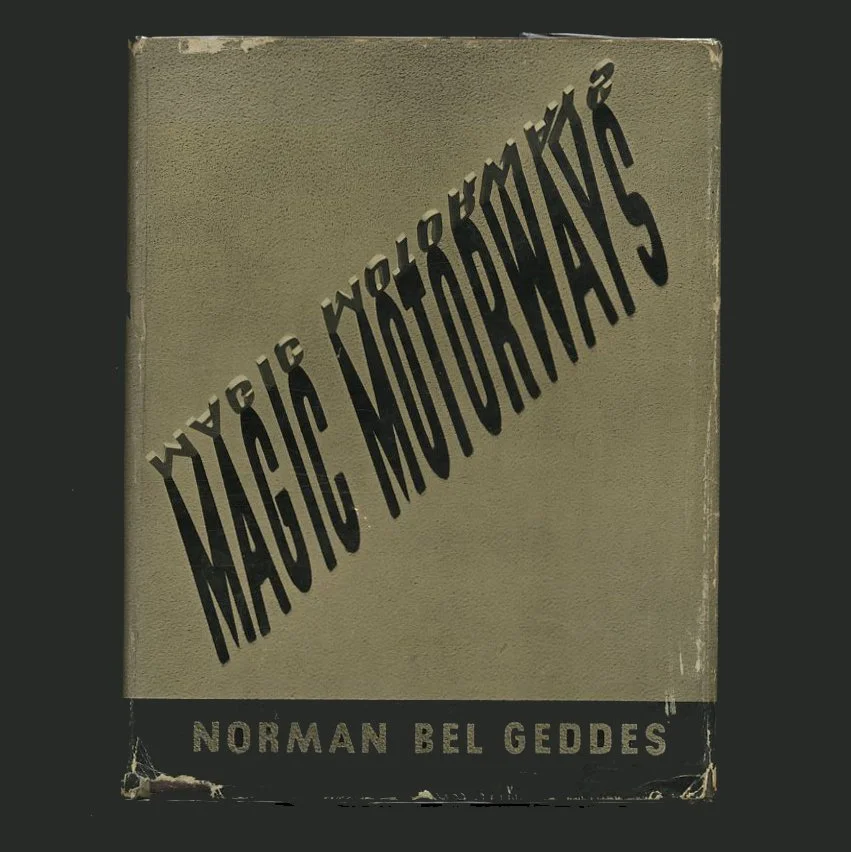 Image 1 of 18
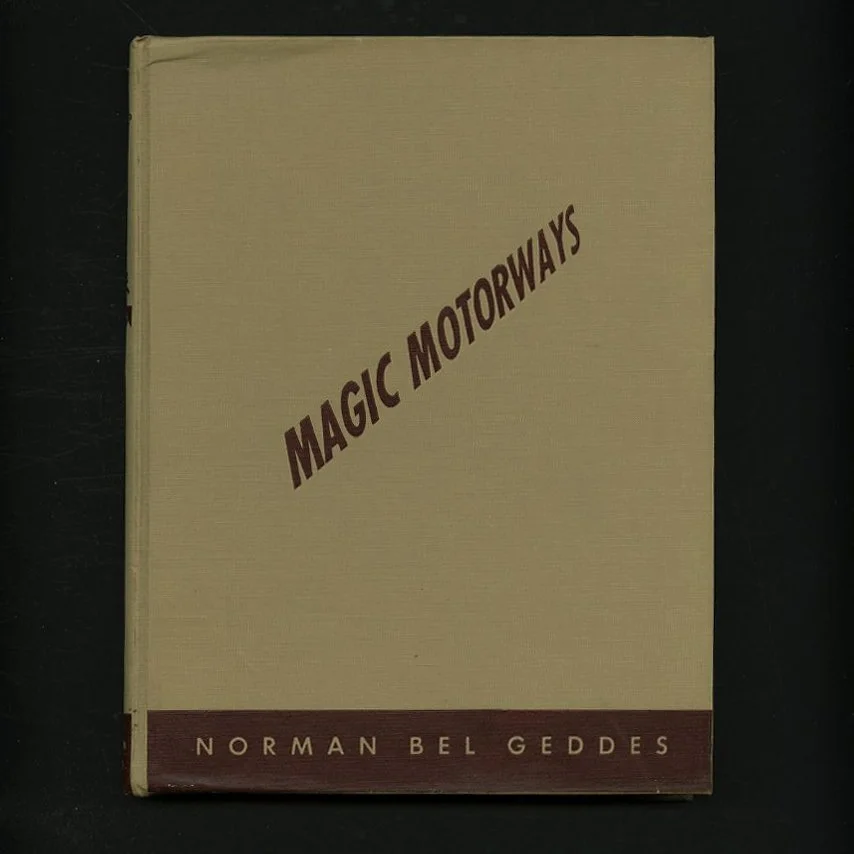 Image 2 of 18
 Image 3 of 18
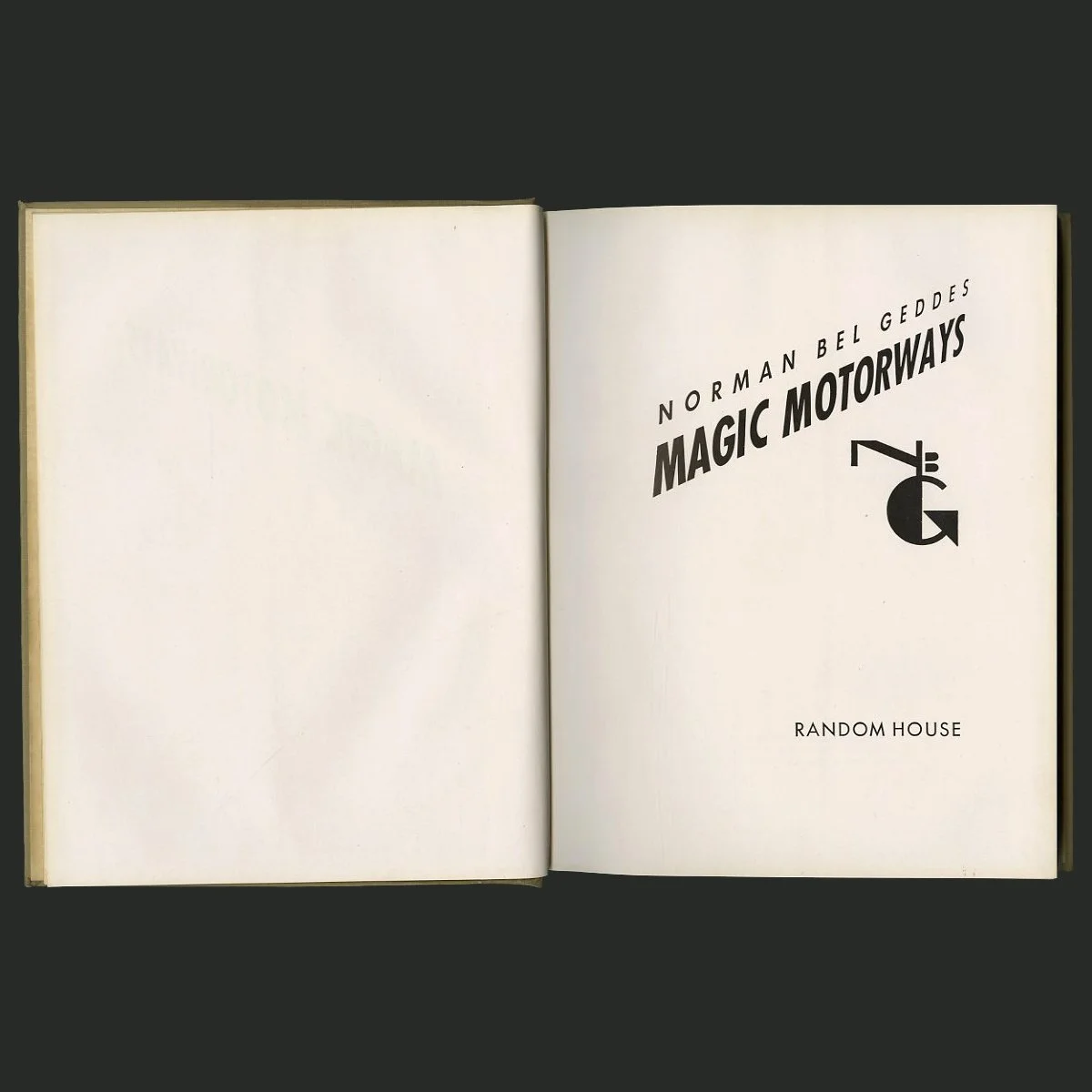 Image 4 of 18
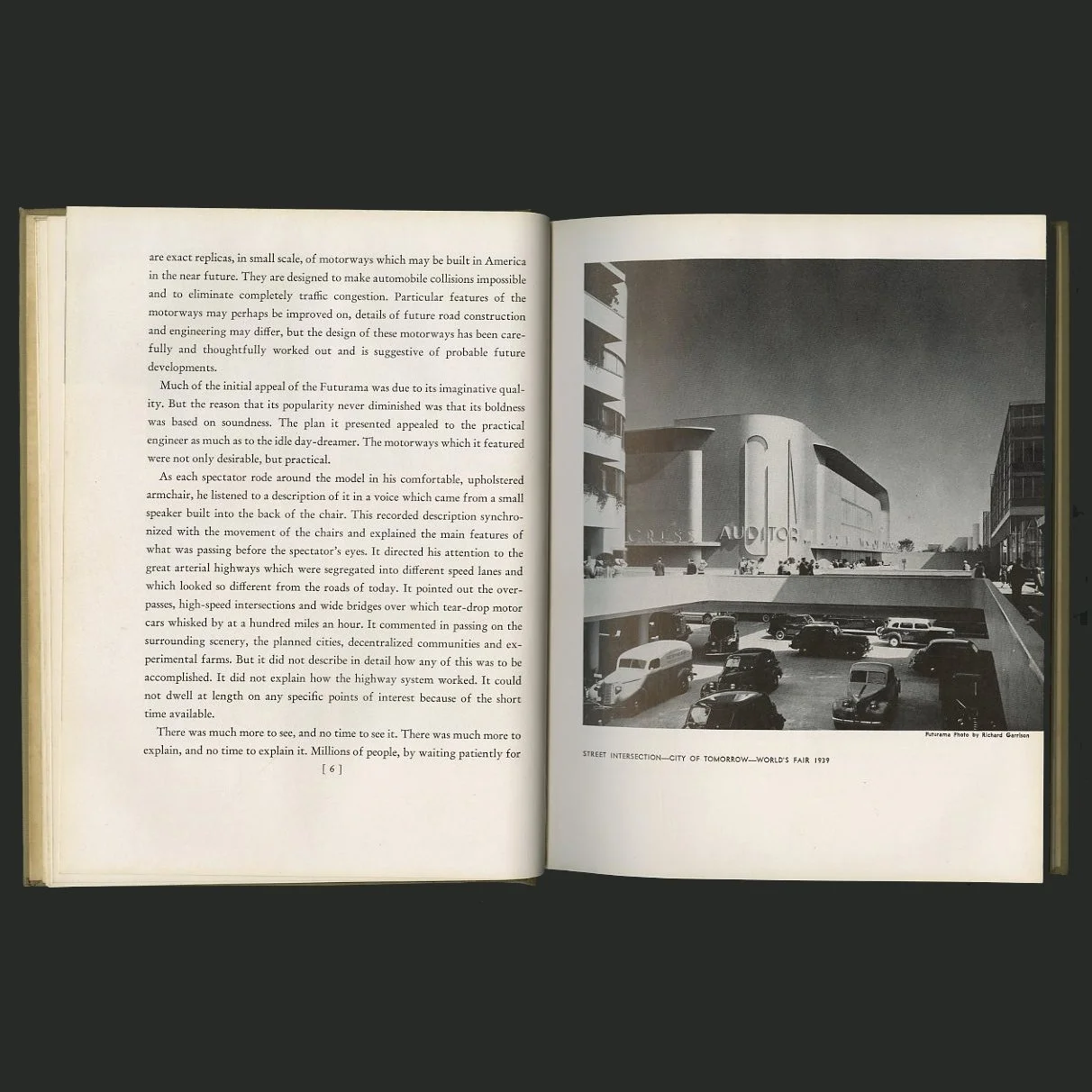 Image 5 of 18
 Image 6 of 18
 Image 7 of 18
 Image 8 of 18
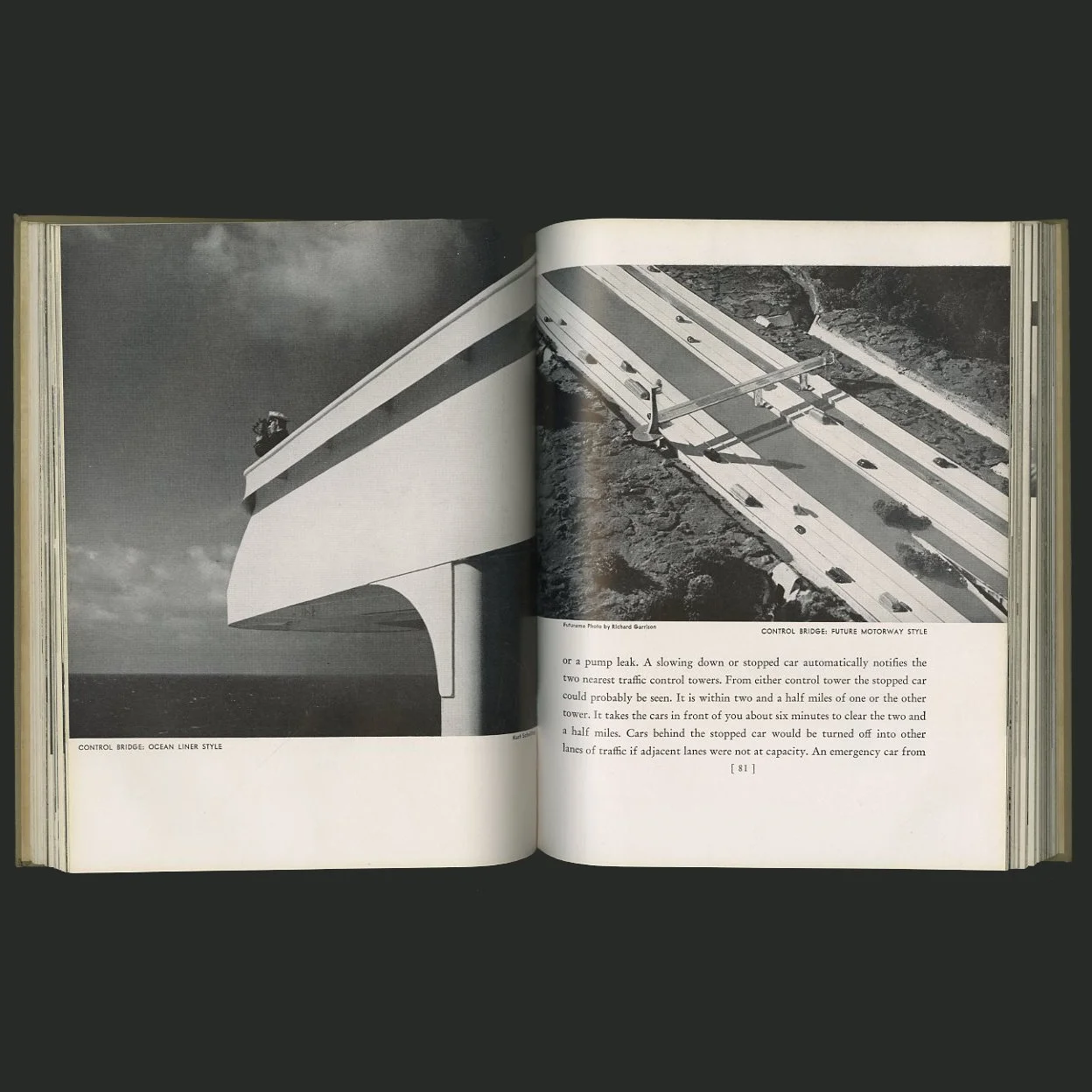 Image 9 of 18
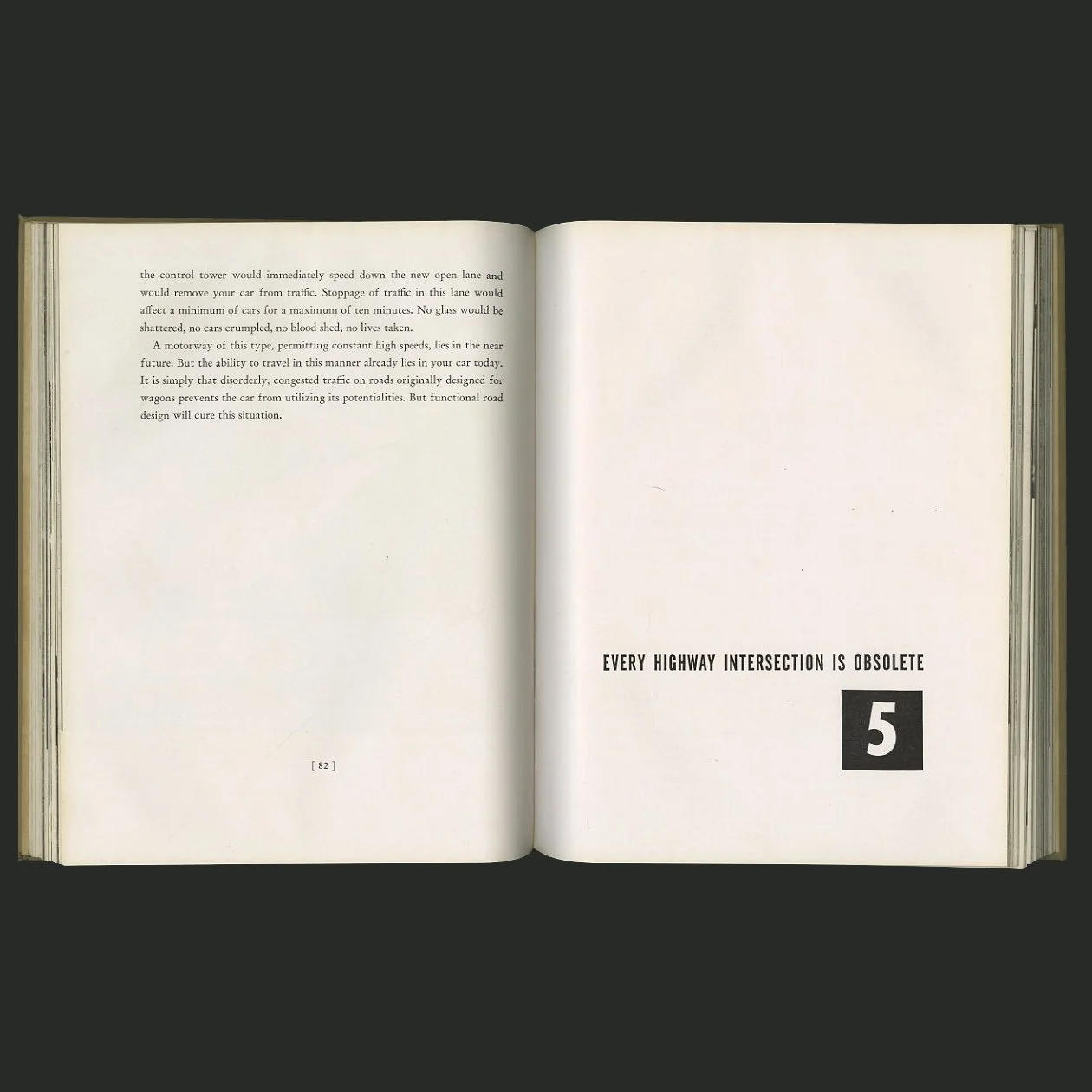 Image 10 of 18
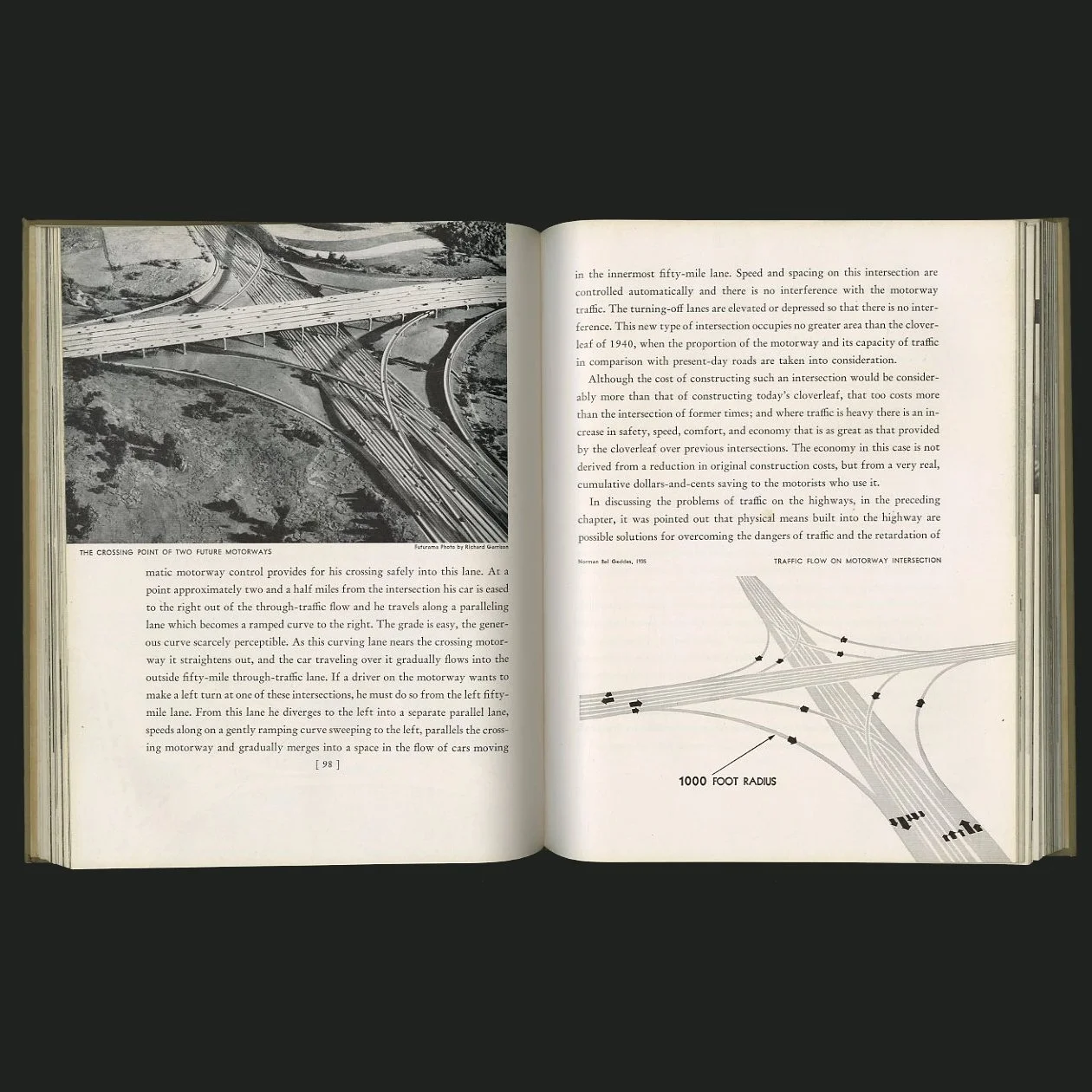 Image 11 of 18
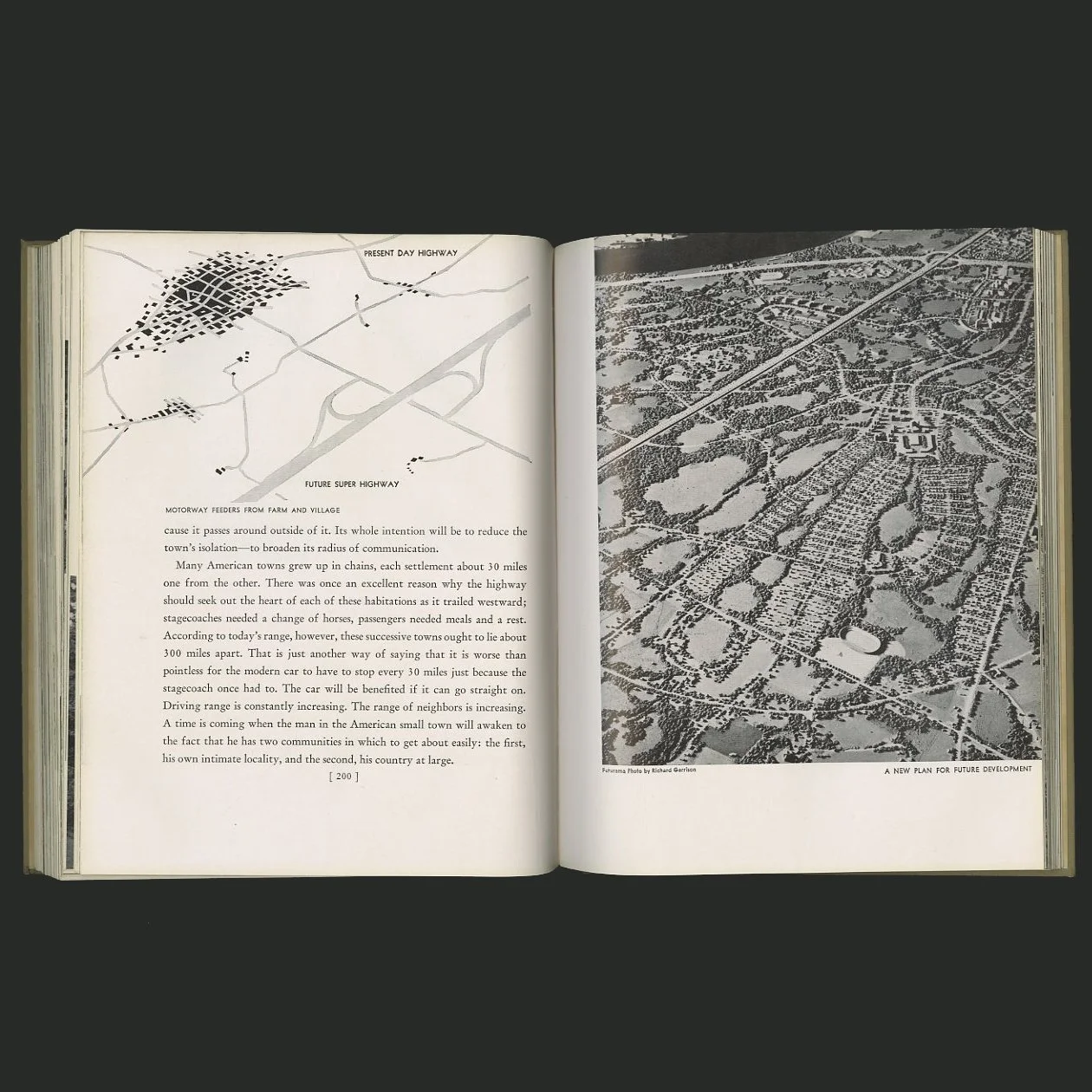 Image 12 of 18
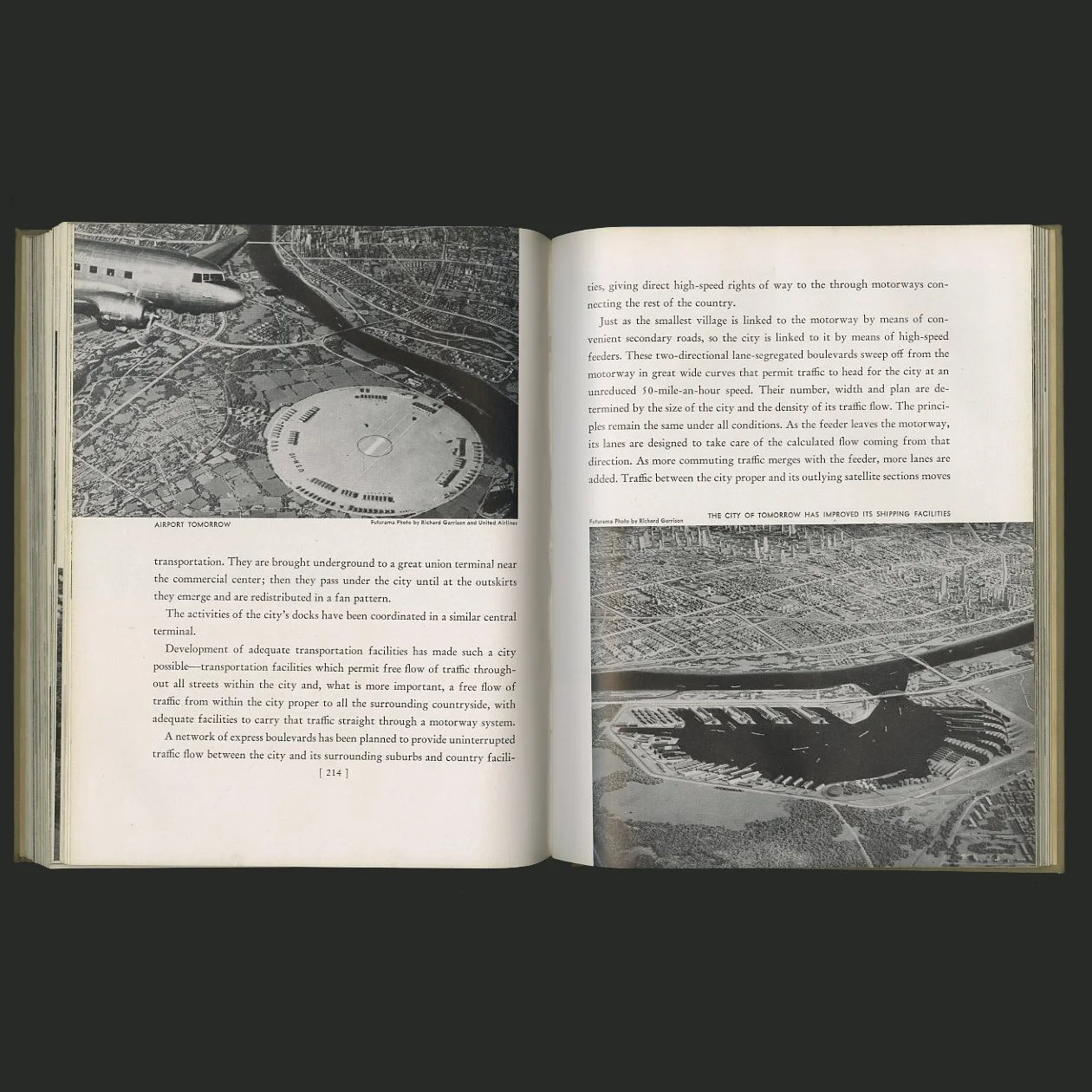 Image 13 of 18
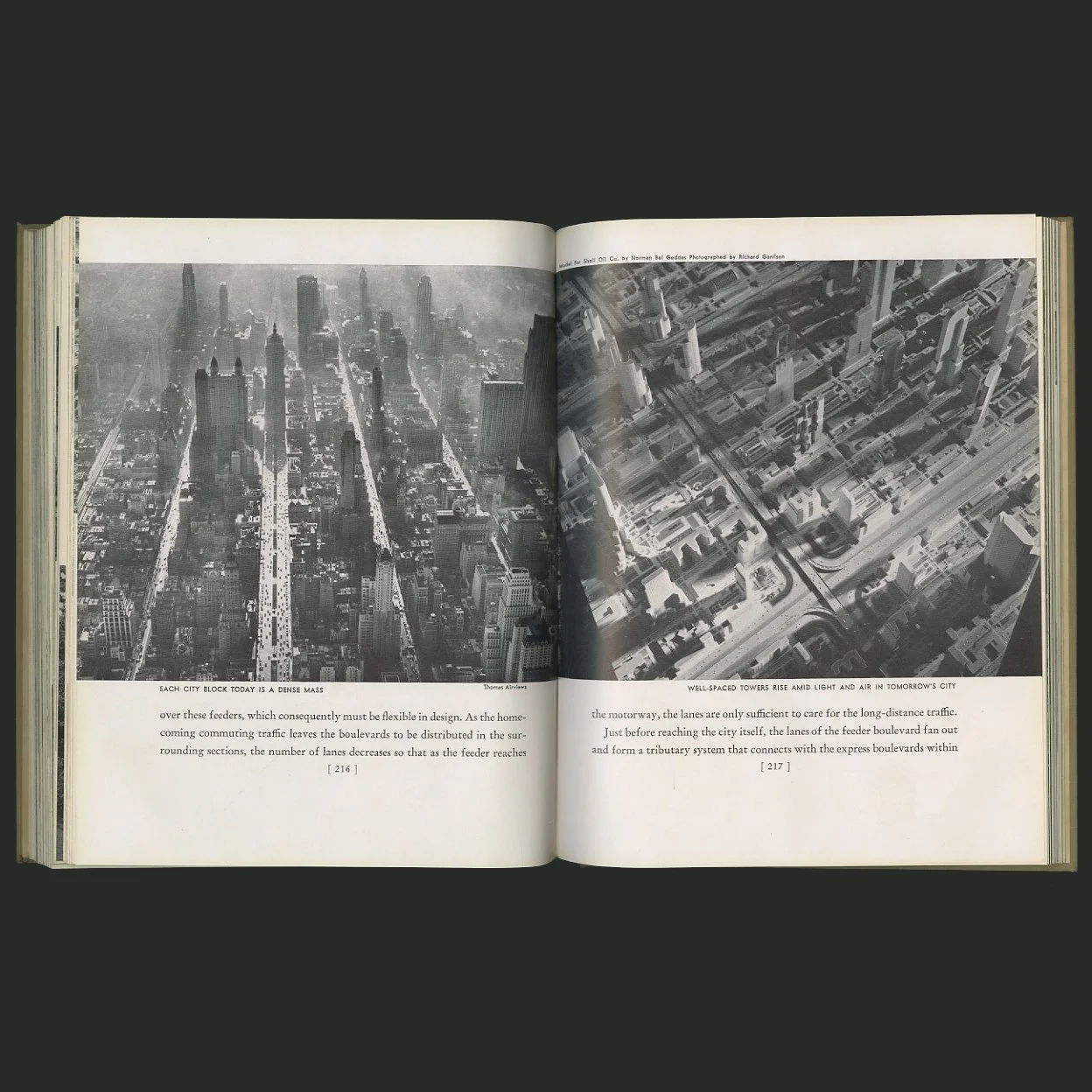 Image 14 of 18
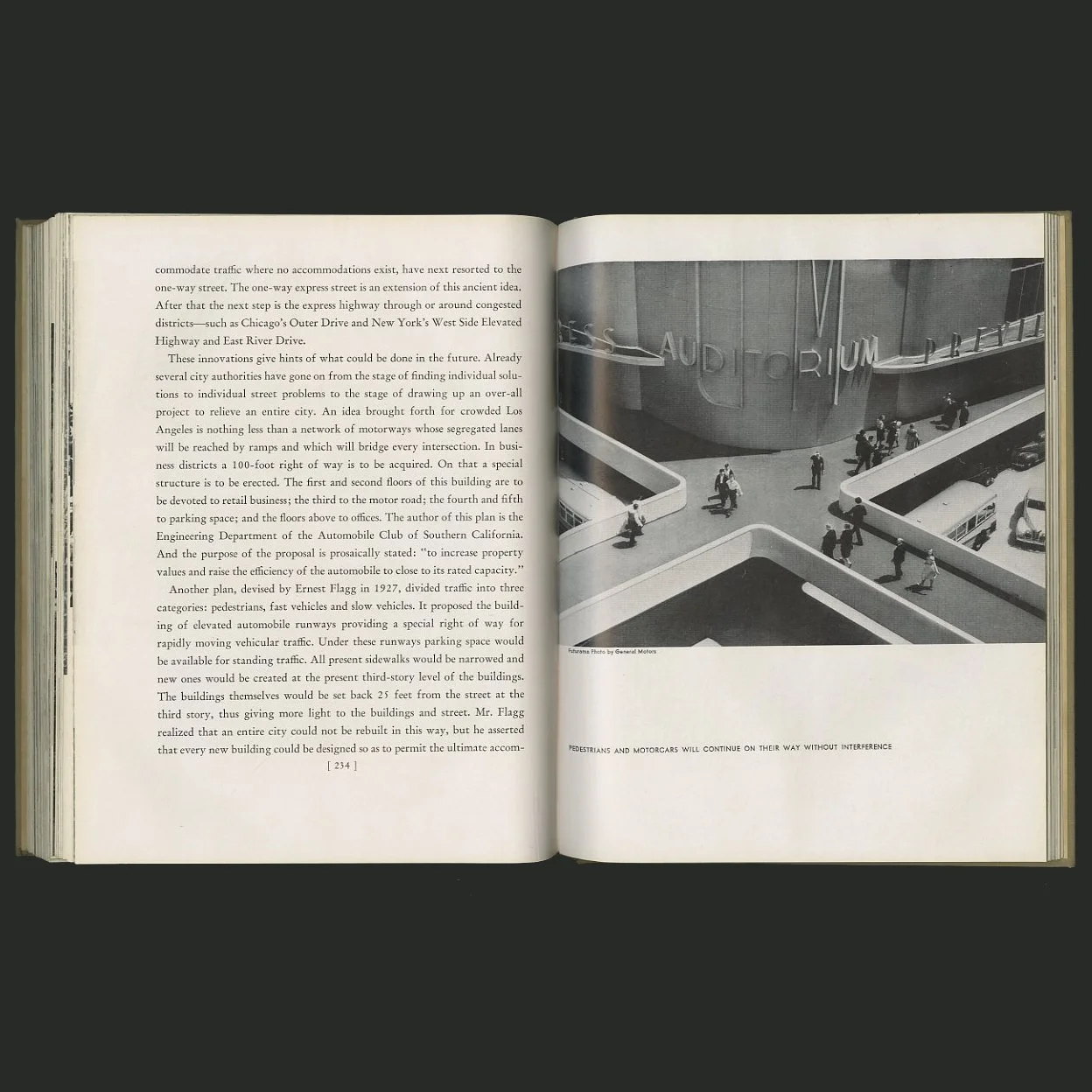 Image 15 of 18
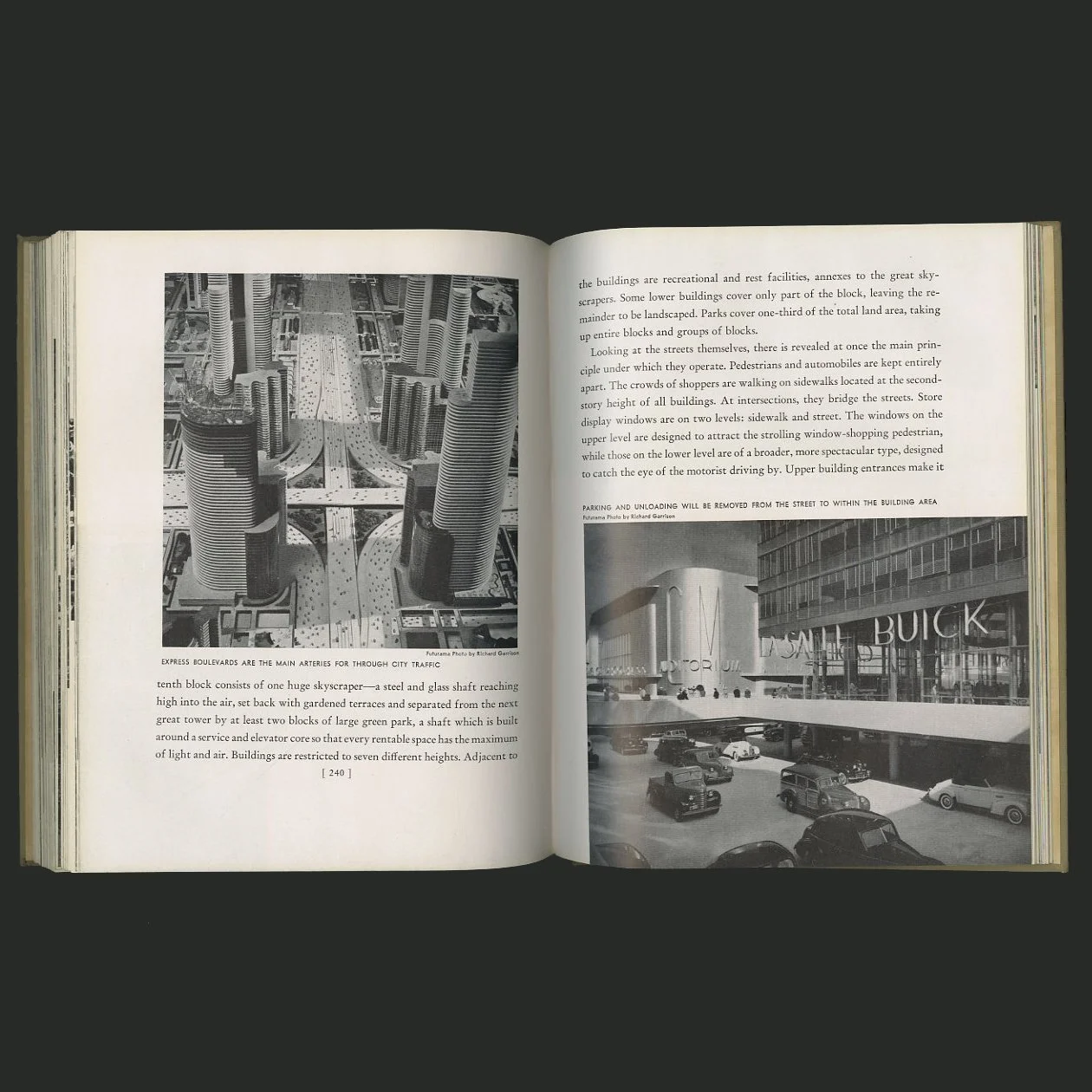 Image 16 of 18
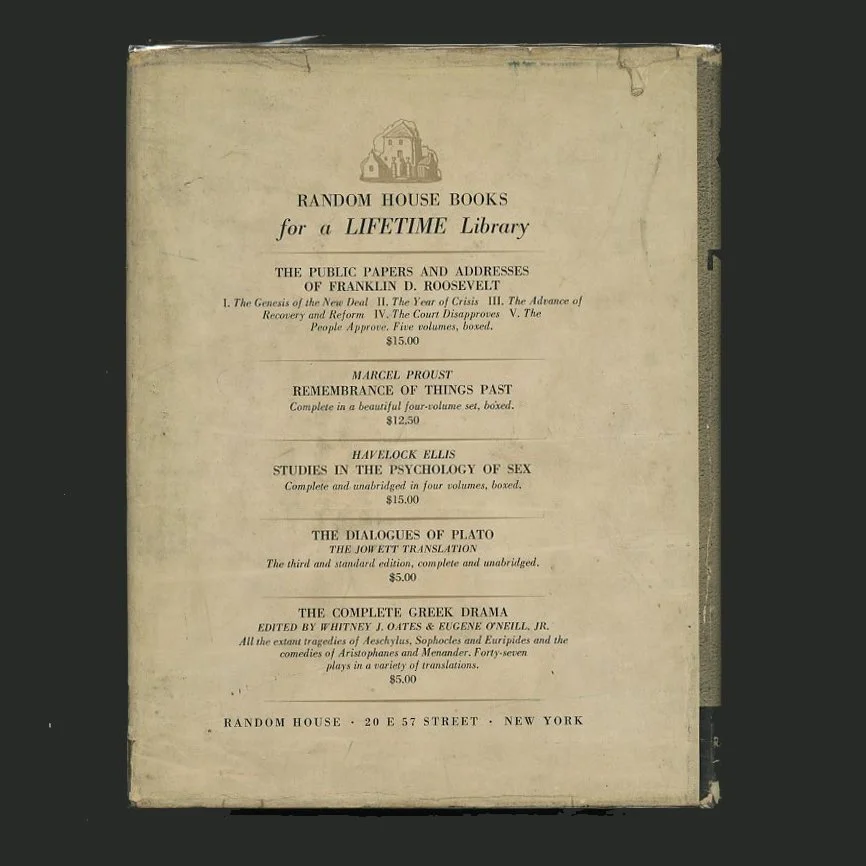 Image 17 of 18
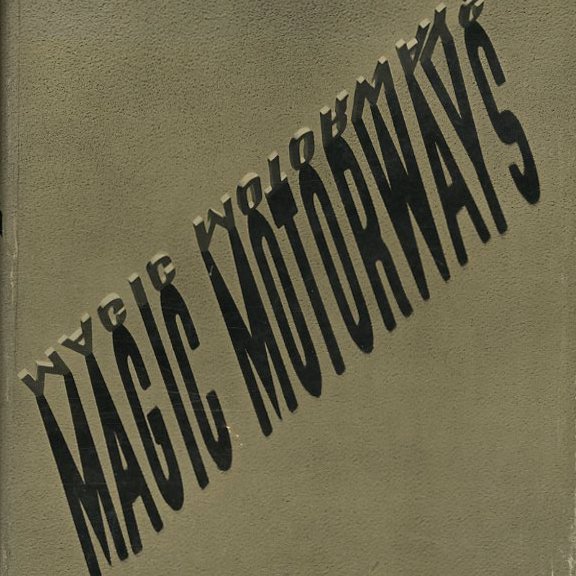 Image 18 of 18